10 Incredible Great Business Ideas to Ignite Your Success
 Mean CEO | Violetta Bonenkamp
23/07/2024 - 16 mins read

TL;DR
Great business ideas can change your life as an entrepreneur. Start by finding a niche that fits your skills and interests. Look at what people want and see where you can help. Talk to potential customers to learn what they need. Create a solid business plan that outlines your goals and how to reach your audience.
Next, put your ideas into action and test them out. Make a simple version of your product to get feedback. Use social media to promote your business and measure how well you are doing. Build strong relationships with your customers and be ready to grow when the time is right. Keep learning and adapting your strategies. For more fun and insights, check out the STARTUP GAME.
Introduction
Starting a business can be hard. As an entrepreneur, you need to find great business ideas that can bring you success. When I first began my journey, I had many questions. I carried doubt but I also had a vision. My path in tech and education taught me the value of a strong idea backed by solid research. Before the idea becomes too public, the guide on protecting 3D design IP helps you protect the business properly.
Today, I want to help you with simple ways to identify, build, and grow your business. I started from scratch, learned to build prototypes quickly, and created solid marketing plans. Join me as I share insights and strategies to ignite your success in the entrepreneurial world.
Exploring Unique Great Business Ideas for Entrepreneurs
- 1. Research current market trends and demands
- 2. Identify gaps that align with your interests
- 3. Analyze your competition
Identifying Profitable Niches to Explore Great Business Ideas
Finding great business ideas starts with market research. You need to know what is popular now. Look for what people are buying. Websites like Google Trends can show you what is trending. Use this tool to check for spikes in interest. It’s a simple way to find ideas that are gaining attention.
Next, look for gaps in the market. This means finding something that no one else is doing. Think about what you love. Your passion can lead to great business ideas. If you love cooking, think of a service that makes meal prep easy for busy people.
Finally, check out your competition. Look at their strengths and weaknesses. See what makes them popular and where they fail. This will help you understand how you can fill the gaps. Research can be done through a simple web search or by visiting local stores. Good research leads to better business ideas.
Understanding Your Target Audience for Great Business Ideas
Next, you must understand who your customers are. Start by building buyer personas. This means creating a picture of your ideal customer. Ask questions like: How old are they? What are their interests? This helps in crafting great business ideas that fit their needs.
Talk to potential customers directly. Using social media can help with this step. Engage with people who might be interested in your idea. Ask them what they want. Use this feedback to adjust your idea. Often, people will tell you exact needs you can meet.
Surveys can also be useful. Use tools like Google Forms to create easy surveys for people. Ask simple questions that give you clear answers. This feedback is essential for refining your great business ideas.
Creating a Solid Business Plan Around Great Business Ideas
Your business plan is your road map. It should outline your business model. Decide how you will make money. Will you sell a product, offer services, or both? Be clear about your value proposition. This is what makes you special compared to others.
Set specific and realistic financial goals. What do you want to achieve in a year? How about in five years? Knowing these targets helps you stay focused and motivated. Make sure the numbers are doable, not just wishful thinking.
Think about your marketing strategy. How will you reach your audience? Social media, blogs, and email campaigns are a few options. Knowing how you plan to promote is vital for your success.
Before writing the business plan make sure to validate your business idea effectively using methods like Mom’s Test.
By following these steps, you can shape your great business ideas into something real, ready for action.
How to Identify Great Business Ideas for Your Startup
- 1. Research current market trends and demands
- 2. Identify gaps in the market that resonate with your interests
- 3. Analyze competitors to find your unique niche
- 4. Develop buyer personas to understand your target audience
- 5. Engage in conversations with potential customers for insights
- 6. Utilize surveys to gather feedback and refine your concept
- 7. Outline your business model and value proposition clearly
- 8. Set achievable financial goals and projections
- 9. Create a marketing strategy tailored for your target audience
- 10. Monitor industry changes to adjust your business approach
What Are Great Business Ideas That Can Transform Your Startup?
Uncovering great business ideas is a journey many entrepreneurs embark on. The key lies in understanding market needs, customer pain points, and your own unique skills. Explore what drives your passion—this could lead to the next big opportunity. Are you ready to ignite your success?
Implementing and Testing Great Business Ideas Efficiently
- 1. Develop a Minimum Viable Product (MVP)
- 2. Leverage Digital Marketing Strategies
- 3. Measure Success and Know When to Pivot
Developing a Minimum Viable Product (MVP)
A Minimum Viable Product (MVP) is your first step. It helps you test your great business idea with real users. You need to identify the must-have features. These are the basic features that solve a problem for your customers. Focus on launching your MVP quickly.
By launching fast, you gather valuable feedback. Customers will tell you what they like and what needs fixing. This feedback is pure gold. Use it to improve your product. You can avoid wasting time on features no one wants.
Adjust your MVP based on user comments. This can mean adding new features or changing current ones. Continual improvement is key. It helps your great business idea evolve into something customers truly need.
Leveraging Digital Marketing Strategies
Digital marketing plays a major role in promoting great business ideas. Start by using social media. Platforms like Instagram and Facebook can help build your brand. Create engaging content that shows the value of your product. Posts should be clear, visually appealing, and shareable.
Using content marketing is also essential. Write blogs or make videos that share expert tips related to your product. This positions you as a knowledgeable source. It can draw more people to your brand over time.
Consider paid ads too. They can help you reach more people quickly. A small spend on advertising can lead to valuable customers. Always measure your advertising results. This data will show what works best for your great business idea.
Measuring Success and Pivoting Based on Great Business Ideas Outcomes
Measuring success is essential. Start by setting Key Performance Indicators (KPIs). KPIs are metrics that show how well you are doing. This might be sales numbers, website traffic, or user engagement. Choose KPIs that matter for your great business idea.
Analyze your data regularly. Look for trends. What is working? What is not? If something is failing, ask why. This can help you understand what needs to change.
Don’t be afraid to pivot. This means changing your approach if your current one is not working. Being flexible can save your great business idea. Sometimes slight changes lead to huge successes. Always be willing to adapt to new information and market needs.
Sustaining Growth with Innovative Great Business Ideas
- 1. Build Strong Customer Relationships
- 2. Scale Operations Effectively
- 3. Focus on Continual Learning
Developing Strong Customer Relationships for Great Business Ideas
Building strong customer relationships is key. It keeps your customers happy and loyal. Start by engaging with them directly. Answer their questions and take their feedback seriously. Show them that you care. When customers feel valued, they come back.
Offer great customer service. Make it easy for them to reach out to you. Respond quickly to emails, calls, or messages. Consider using a CRM (Customer Relationship Management) system to track interactions. This keeps everything organized and personal. A satisfied customer is your best advertisement.
Loyalty programs are also smart. Create rewards or discounts for repeat customers. They love the feeling of getting something back. This not only keeps them coming back, but it also encourages them to spread the word about your great business ideas. Personal touches matter here.
Scaling Operations for Your Great Business Ideas Effectively
Know when it’s time to scale your business. If you are consistently hitting your goals, growth may be next. Look for signs like increased demand or a lack of capacity. Hiring new staff is often a good first step. Choose people who share your vision for great business ideas.
Make use of technology to help. Automate repetitive tasks where possible. Tools like project management software can streamline operations. This saves time and reduces mistakes. It can lead to better satisfaction for both your team and customers.
Do not rush the process. Scaling too quickly can lead to problems. Ensure you have enough resources in place first. Keep track of metrics to understand your growth. Adjust as needed to stay on track.
To plan growth before it happens, use our startup scalability and workflow templates, which help you check processes, staff and budget before you take on more customers.
Continual Learning and Adapting Your Great Business Ideas
Staying updated on industry trends is critical. Attend workshops, webinars, and conferences. Join online groups related to your industry. This helps you learn and grow. New ideas can come from other entrepreneurs. They could solve problems you didn’t even know you had.
Foster a culture of feedback in your team. Encourage everyone to share their thoughts. Regular team check-ins can help identify areas for improvement. Make it a priority to adapt your great business ideas based on real feedback. Flexibility is key in the fast-paced world of startups.
Consider partnerships or collaborations. They can give you access to new markets. A good partnership can enhance your services too. You get to share resources and knowledge, which is a big win.
Conclusion
To find great business ideas, focus on what people need. Pay attention to market trends and gaps. Understand who your customers are. This process will help you shape your concept, ensuring it meets real needs.
Once you have great business ideas, test them. Use a minimum viable product to get feedback. This way, you can improve quickly. Stay adaptable and maintain strong customer relationships. These steps will help you grow your business and reach success.
What are Great Business Ideas?
Great business ideas start with solving a problem or filling a gap. These ideas can come from personal experiences or market needs. Many entrepreneurs find success by looking for what people want but cannot find easily. Exploring trends and listening to potential customers can reveal great business ideas. These ideas may lead to new products, services, or solutions.
FAQ
What are some great business ideas for tech startups?
There are many great business ideas for tech startups. Some popular ideas include creating mobile apps, developing AI tools, or offering web development services. Another option is to start an eCommerce platform focused on a niche market.
What is the most profitable tech business to start?
The most profitable tech businesses often solve real-world problems. Some of the best ideas include software development, customer relationship management, and eCommerce. AI-powered solutions are trending and can lead to high returns.
How do I start a tech startup?
Starting a tech startup involves several steps. First, you need a solid business idea. Next, create a business plan and conduct market research. Then, build a minimum viable product, or MVP, to test with users.
What challenges do tech startups face?
Tech startups face many challenges, such as funding issues, market competition, and customer acquisition. They often have to navigate the tech landscape’s fast changes. Building a strong team and having a good mentor can help.
How can I find investors for my tech startup?
Finding investors for your tech startup is important. Start by networking at tech conferences and joining startup events. Use platforms like LinkedIn to connect with potential investors. Craft a clear pitch that highlights your unique value.
What are great business ideas that involve AI technology?
AI technology offers many great business ideas. You could start a company that develops AI-driven chatbots or personal assistants. Another idea is to create data analysis tools for businesses.
How do successful tech startups manage growth?
Successful tech startups manage growth by focusing on scalability. They develop processes and systems that can grow with the business. Regularly review financials and get user feedback to adapt.
What market trends should tech startups watch?
Tech startups should watch trends in AI, remote work tools, and sustainability. These areas show high growth and demand. Companies focusing on these trends can tap into new markets.
What resources are available for tech entrepreneurs?
Many resources are available for tech entrepreneurs. Online courses, startup competitions, and incubators can provide valuable support. Local entrepreneurial networking groups also offer mentoring and guidance.
What types of tech solutions are in demand right now?
Currently, remote working tools, health tech, and eCommerce solutions are in high demand. Many businesses need these solutions to adapt and succeed. Exploring these areas can lead to great business ideas.
Additional Resources
For those who want to explore more great business ideas and tools, here are ten helpful articles and resources to guide your journey:
- MVP Case Study: How we built a startup game without developers in 12 weeks – Learn how to create your startup without coding skills.
- Do It Yourself: why you DON’T need a technical co-founder – Find out how to succeed without a technical partner in your startup.
- Networking and you! – Discover the power of networking for your startup success.
- How to be a Great Founder – Get tips on becoming the best founder for your startup.
- Essential Guide to Business Model Canvas (with FREE AI tools & Templates) – Learn how to shape your startup’s business model easily.
- Got a Startup Idea but Don’t Know Where to Begin? Try Fe/male Switch! – Find support and guidance for your startup idea here.
- Learning to sell is paramount for first-time entrepreneurs – Understand the basics of selling for your startup success.
- 5 Zero-Cost Ways to Unlock Your Startup’s Marketing Strategy – Explore cost-effective marketing tips for your startup.
- EU grants: a guide on writing a funding application – Learn how to apply for grants to fund your startup.
- Female Entrepreneurship: The Fastest-Growing Sector in Modern Business – Discover how female entrepreneurs are changing the business world.
Startup Resources:
Marketing with Bootstrap Budgets
Marketing can feel like a hurdle when capital is tight, but bootstrapped startups are proving it’s possible to thrive without massive spending. Learn how European founders in 2026 are marketing smarter, not harder with customer-centric strategies, creative partnerships, and organic growth channels. Female entrepreneurs, especially, excel in building trust-driven brands by focusing on authentic connections over flashy campaigns.
Laughter as Founder Therapy
For every late night, every pitch gone wrong, and every product pivot, there’s a meme that gets it. Startup humor isn’t just jokes, it’s how founders stay sane. Dive into startup jokes and memes made for 2026 and find your stress relief playlist. From bootstrapping struggles to investor hiccups, these laughs remind you that you’re never growing alone.
Affordable Branding for Bootstrappers
Bootstrapping a startup means tight budgets, but that shouldn’t hold your vision back. Tools like Canva give entrepreneurs professional design capabilities without the need for a full-time designer. Dive into how Canva is enabling startup founders to level up their branding with affordable, intuitive design options that scale as your business grows. With resources like this, even small teams can present like industries’ biggest players.
Automate Without Breaking the Bank
Open-source tools are changing how startups operate, letting you do more with less. With their cost-effectiveness and flexibility, they help bootstrapping founders stay lean while scaling up. See how entrepreneurs are leveraging open-source alternatives to scale on a budget through automation. If you’re ready to cut costs without cutting corners, these tools are a must-have in your stack.
Workflow Automation for Scaling Smarter
Startups today need to do more with less, and automation is proving to be an essential tool. Discover how Make.com helps bootstrap founders manage workflows across platforms without needing a technical co-founder. From automating email follow-ups to integrating payment systems, this guide shows how scalable automation saves both budget and time. Female founders are using tools like Make.com not just to reduce manual tasks but also to focus their energy where it matters, on customers.
DIY Website Wins for Bootstrappers
Startup budgets in 2026 often leave little room for expensive web development. Female founders and bootstrappers across Europe are discovering how WordPress empowers startups to scale smartly by offering flexibility, affordability, and control. Build your website, tailor it to your market, and adapt it as your startup grows, all without coding expertise or deep pockets. This DIY approach keeps costs low and ROI high, making it a favorite for scrappy entrepreneurs.
Launching Without Code: A New Normal
More founders are turning to no-code tools to bring their ideas to life without huge development budgets. Bubble.io is a favorite among European entrepreneurs for its ability to help build powerful apps and validate ideas swiftly. Learn how no-code platforms are empowering female entrepreneurs in 2026 to take control of their product roadmaps, cut costs, and iterate based on real customer feedback, all without hiring a single developer.
From Hobby to Scalable Business: Turning Ideas Into Reality
Many aspiring female entrepreneurs start with an idea but get stuck translating it into a viable business. The secret lies in testing small, getting customer validation early, and then layering tools for growth. Learn how successful startups in Europe structured their ideation process to move from casual brainstorms to scalable operations. If you’re serious about making your vision work, these strategies can help you take that critical first step.
Testing Before Building Saves Euros
Building on passion alone can backfire if buyers aren’t ready to pay. That’s why successful bootstrapped startups are dialing in their focus on validating ideas effectively before investing money. Learn about the practical tests these founders run, from landing pages to concierge MVPs, that help them uncover paying customers and sharp market insights. For female entrepreneurs in Europe juggling tight budgets, these strategies turn high-risk ideas into calculated bets.
Tools That Let You Do More With Less
Bootstrapping founders, especially in Europe, can’t afford bloated tech stacks that drain resources without delivering results. The smartest startups are adopting lean toolkits that tackle the biggest pain points with minimal spend. Explore which startup tools for European founders in 2026 are helping bootstrappers stay competitive by simplifying workflows, automating manual tasks, and optimizing decision-making in real-time. Every tool on this list is designed with budget-conscious growth in mind.
Podcasts as a Secret Sauce for Bootstrappers
Time-strapped entrepreneurs often find new inspiration and concrete strategies by listening to relevant audio content. Discover which startup podcasts in 2026 are a must-have in the toolkit of female bootstrappers and European founders. From accelerating product-market fit to learning from experienced operators, these podcasts are all about giving you the competitive edge you need to scale, smarter and leaner, while staying authentic to your vision.
Mastering Startup Fundraising in Europe
Securing funding looks different on this side of the Atlantic. Many European female founders and bootstrappers are finding success with smaller, more strategic raises coupled with alternate funding options. Dive into how European founders in 2026 are navigating the fundraising maze while keeping equity and control. Understanding regional differences and focusing on early traction could be the keys to maintaining ownership and scaling sustainably.
Bootstrapping Without Sacrificing Ambition
Starting a business on a tight budget requires creativity, strategic planning, and resilience, traits that female entrepreneurs across Europe are mastering. Discover how these founders are turning constraints into strengths with practical strategies for launching a business on a shoestring budget. If you’re looking to start small but think big, this guide will help you turn your entrepreneurial vision into reality while staying frugal.
The Foundation of Sustainable Growth
Every successful startup stands on a rock-solid foundation of basics done right. From choosing your co-founder wisely to understanding your target market, nailing the fundamentals provides leverage for long-term success. Uncover how mastering the essentials is the secret of every winning startup today, and why skipping the groundwork could be your biggest risk. Female founders bootstrapping their way across Europe are proving that the right start lays the path for sustainable growth and resilience.
Resilience Through Bootstrapping
Female entrepreneurs building businesses in Europe face unique funding challenges but are turning these constraints into strength. By focusing on profitability from day one, they have created sustainable businesses with loyal customer followings. Learn from the top examples of bootstrapped female-led startups in Europe and see how disciplined spending, sharp customer focus, and resilience are reshaping what success looks like in 2026.
Authors

Mean CEO | Violetta Bonenkamp AUTHOR
MeanCEO (aka Violetta Bonenkamp) is a serial startup founder who brings a decade of entrepreneurial experience to the table. Armed with five Higher Education degrees (including an MBA) and profound knowledge in sectors like blockchain, AI, zero code and education she is a maestro in turning ideas into validated businesses, building prototypes in a few hours and devising marketing strategies for tech startups that increase founder's chances of success. Recognized as one of the top 100 women in EU startups, her guidance is a treasure trove for upcoming and established entrepreneurs alike. Through her venture into entrepreneurship, she has created the "gamepreneurship" methodology, an innovative method for learning business through gameplay.

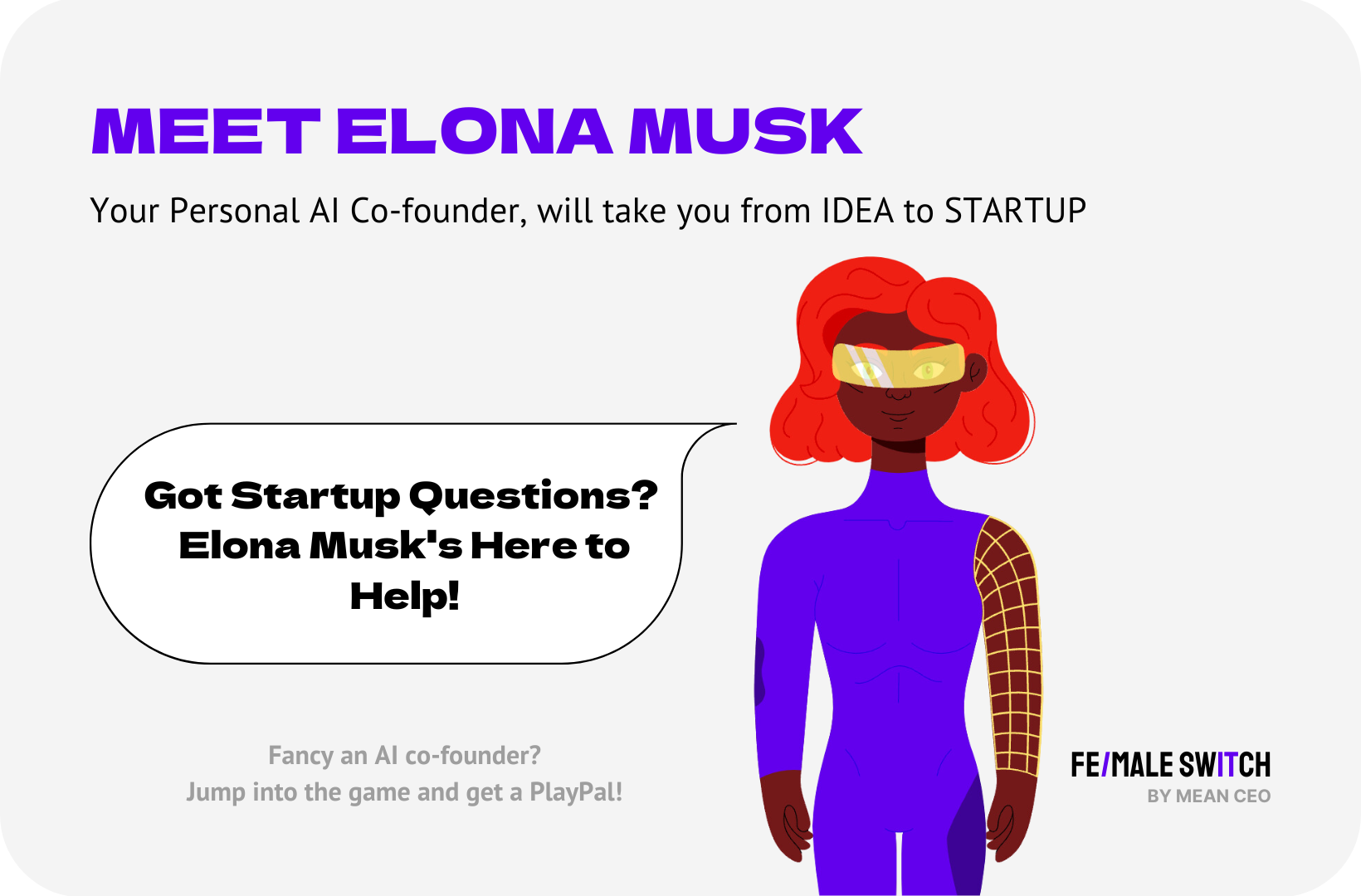
Elona Musk
Elona Musk stands as a mix of innovation and expertise in the realm of AI, serving as the Chief AI Officer at Fe/male Switch. As an embodiment of the startup game for women, Elona is the co-founder you dream of - knowledgeable, always active, capable of keeping trade secrets to herself and equity-free. With her hands-on approach in entrepreneurship simulation, she provides vital strategies and insights that are essential for navigating the complex startup journey and saves entrepreneurs hours of work by automating many tasks, starting from market research to managing social media to writing business plans. Whether it's a marketing strategy for tech startups that you need or a solid IP strategy, Elona's AI-driven insights help carve successful paths for entrepreneurs who don't have technical or startup skills.
Who we are
We are experienced and fun entrepreneurs and awesome AI PlayPals who love building a startup simulator for you to succeed in business

Violetta Bonenkamp
Business and AI expert

Dirk-Jan Bonenkamp
Legal, IP and finance expert
Elona Musk
The first AI entrepreneur

Petra Thiel
The first AI startup investor

Samantha Altman
The first AI startup mentor

Sia Quick
AI Market Research expert
Unleash your inner founder with AI Startup Tools!
Don't just dream it, build it with our range of AI startup tools. From brainstorming ideas to naming your product and crafting a unique logo, these AI tools are your secret weapon to conquer the startup world.
 Newest
Boost Your SEO Game
Generate a customized SEO strategy for your small business agency by answering a simple question. Our tool focuses on free and easy…
 27
19
5/5
Newest
Positioning Pro - Your Strategic Partner
Positioning Pro helps bootstrapped entrepreneurs discover effective segmentation and targeting strategies without spending money. Get tailored insights simply by answering one question.
13
6
5/5
Newest
Gated Content Strategy Tool
This tool provides actionable strategies for bootstrapped entrepreneurs, leveraging free and easy methods to kickstart your journey.
25
18
5/5
Recommended for you

Pitch Deck Agencies for Climate Tech Startups, Energy and Biotech Founders
Pitch deck agencies for climate tech startups, energy and biotech founders: who handles science-heavy decks, published prices and how to brief them.
Read more
Write for Us: Business, Technology and Startup Guest Posts
Write for us: business, technology, AI and fintech guest posts for founders. See what Fe/male Switch publishes, the guest post checklist and how to pitch.
Read more
7 Catchy and Unique Business Name Ideas
Explore 7 catchy business name ideas that stand out! Get easy tips, hacks, and a splash of humor to kickstart your startup journey! Dive in and find your…
Read more