What Is the Easiest Business to Start? 8 Low-Cost Picks
TL;DR
The easiest business to start is a service built on a skill you already use: freelancing, virtual assistance, tutoring, social media help, pet sitting or cleaning. It needs no stock or premises, the legal setup is free or cheap, and you can land a first client in a week; for more ideas sorted by cost, see our low start-up cost businesses.
 Mean CEO | Violetta Bonenkamp
09/08/2024 - 10 mins read
Join the F/MS Startup Game now
Access all AI tools, advanced features & more!

Harness our free AI tools for building your startup.

Get a customized live roadmap for your startup.

Join our Community and connect with entrepreneurs.
The easiest business to start is a service you sell with skills you already have: freelance writing or design, virtual assistance, tutoring, social media help for local shops, pet sitting or cleaning. You need no stock, no premises and no investor, and in the US, the UK and the Netherlands a one-person service business can be set up in a day for little or no money.
I’m Violetta Bonenkamp, also known as Mean CEO. I founded Fe/male Switch, a startup game for women founders, and CADChain, and I’m allergic to advice that ends with “just follow your passion”. This guide gives you a simple test for what makes a business easy, eight ideas that pass it, what the legal setup costs in three countries, and a seven-day plan to land your first paying customer.
What is the easiest business to start?
The easiest business to start is one where you can sell the first job within 30 days, with money you already have and a skill you already use. Everything else on a “best business ideas” list is a nice story until those three conditions are met.
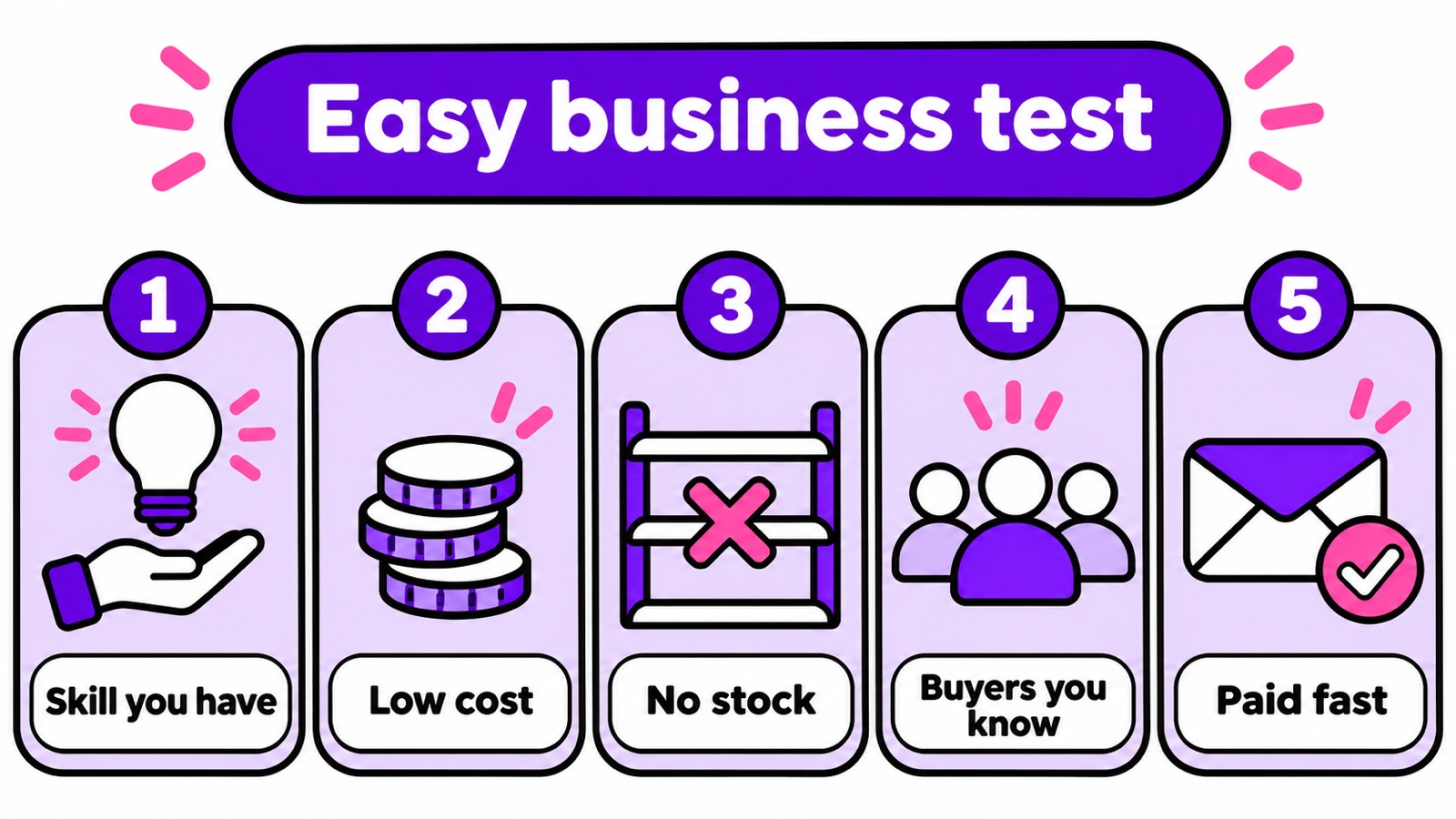
I use five checks. A business that passes all five is easy to start; a business that fails two of them is a project, and projects need savings, time or a co-founder.
- You already have the skill. No course, certificate or licence stands between you and the first invoice.
- Start-up costs fit in one month of savings. Your laptop, phone and free software count as equipment.
- No stock and no premises. You sell time or results, so nothing sits on a shelf losing value.
- You know where the first 10 buyers are. Former colleagues, parents at your kid’s school, shop owners on your street.
- The buyer pays within a month. Services get paid per job; apps and content channels take far longer.
If you’d like a second take on the same question, my shortlist of the easiest businesses to launch looks at it from the side of first-time founders who still have a day job.
Which 8 businesses are easiest to start in 2026?
These eight pass the five checks for most people with a few years of work or study behind them. Pick the one that matches a skill someone has already paid you for, even once.
| Business | What you need on day 1 | Where the first buyers are | Watch out for |
|---|---|---|---|
| Freelance writing, design or translation | Laptop, three work samples | Former employers, LinkedIn, freelance marketplaces | Marketplace fees and race-to-the-bottom pricing |
| Virtual assistant | Laptop, calendar and email skills | Busy owners of small firms in your network | Endless “quick favors”: sell fixed hour packages |
| Tutoring | A subject you know well | Parent groups, school notice boards, neighbors | Local rules for working with children |
| Consulting in your old field | Years of work in one industry | Former colleagues and suppliers | Non-compete clauses in your last contract |
| Social media help for local shops | Phone, free scheduling tool | Cafés, salons and shops on your street | Owners who expect sales you can’t promise |
| Pet sitting and dog walking | Reliability, love of animals | Neighbors, local pet groups, sitting apps | Insurance and keys to other people’s homes |
| Cleaning or home organizing | Supplies, a car or good transport | Neighbors, new parents, people moving house | Physical load: price so you don’t burn out |
| Handmade goods online | Materials, good photos | Etsy, local markets, Instagram | Per-listing and per-sale fees eat small prices |
Why services beat products for a first business
A service lets you sell before you spend. You agree on a job, do it and send the invoice, so the customer finances your business. A product business buys materials, packaging and shipping first and hopes someone pays later, which is why I put handmade goods last on the list.
Etsy shows how small fees add up: a $0.20 listing fee per item, charged whether it sells or not, plus a 6.5% transaction fee on the order total including shipping (Etsy Fee Basics, as of November 2026). Payment processing comes on top. On a $12 pair of earrings, those cents decide whether you earn anything.
What about content creation and apps?
A YouTube channel, a blog or an app is cheap to start and slow to pay. You can publish tomorrow, and the first real income arrives months or years later. Keep it as a side project next to a service that pays your bills, and check our list of the most profitable online businesses before you bet on one.
What is the easiest business to start with high profit?
The easiest high-profit businesses are skilled services with no materials: consulting, bookkeeping for small firms, translation, copywriting and design. Almost every euro or dollar a client pays stays with you, because you buy nothing to deliver the work.
The catch is the ceiling. You sell hours, and a week has a limited number of them. Here is how service founders lift that ceiling without hiring:
- Sell packages instead of hours. “Four social media posts a week for a month” is easier to buy than “10 hours of my time”.
- Move regular clients to a monthly retainer. Predictable income beats a full inbox of one-off jobs.
- Raise prices for every new client. Your first three clients get a starter price; client four pays the real one.
- Turn repeated work into a template. A checklist, a course or a done-for-you kit sells while you sleep.
If you want a list sorted by start-up cost instead, our low start-up cost businesses compare ten ideas by what you spend before the first sale.
Can you start a business with zero investment?
Yes, a one-person service business can start with zero investment if you use the laptop and phone you already own and free software. The legal part is cheap too, and in some countries it costs nothing at all.
| Country | Simplest setup | What it costs | Official source |
|---|---|---|---|
| United States | Sole proprietorship: you are one automatically when you do business and don’t register any other structure | Free federal EIN from the IRS; state and local licences vary | SBA, IRS |
| United Kingdom | Sole trader: you can start trading straight away | Free; register for Self Assessment once you earn more than £1,000 in a tax year | GOV.UK |
| Netherlands | Eenmanszaak (sole proprietorship) in the KVK Business Register | One-off registration fee of €85.15, tax-deductible | KVK |
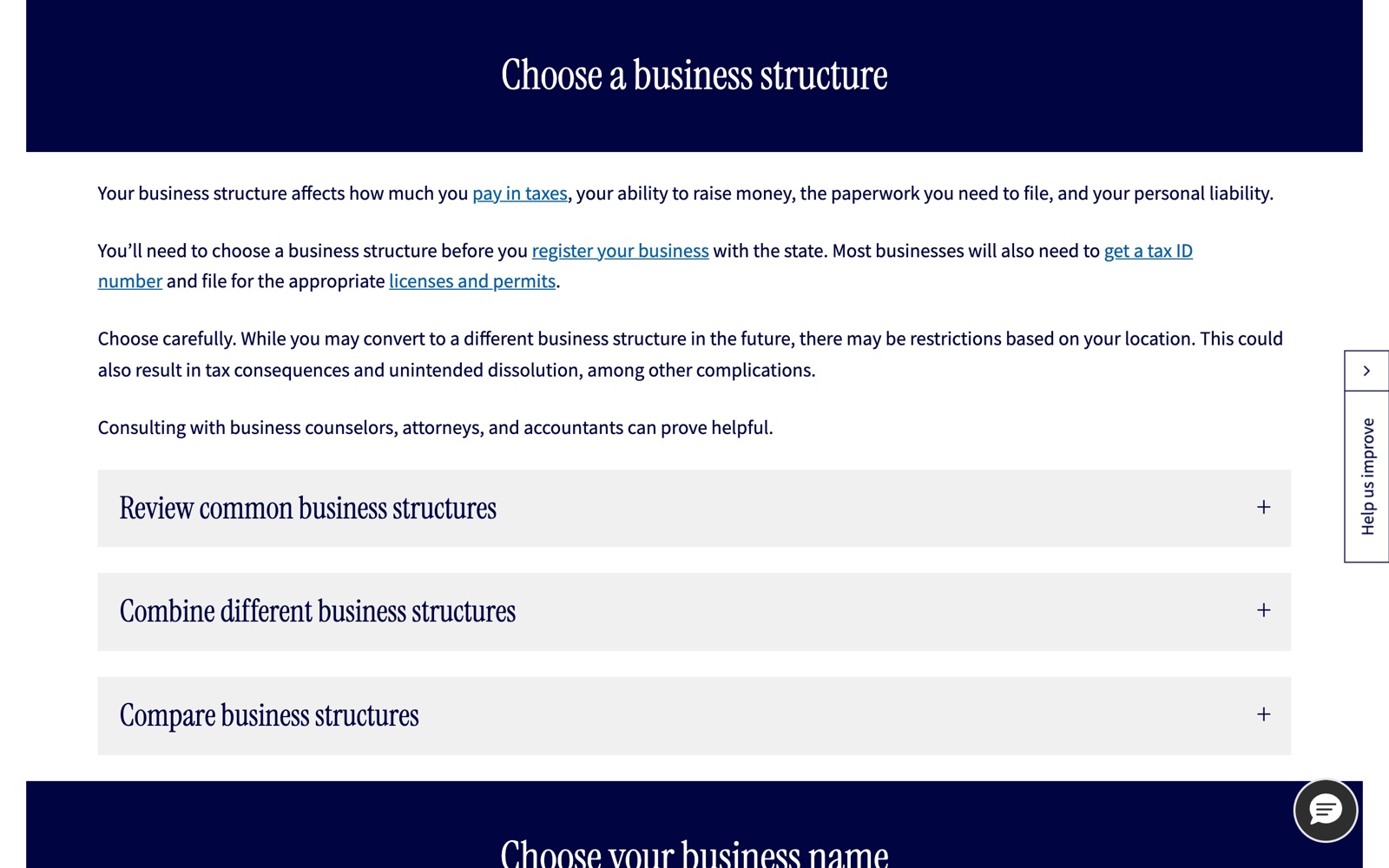
The SBA calls the sole proprietorship easy to form and says it gives you complete control, and it also warns that your business debts are your personal debts, which is why it suits low-risk businesses and owners testing an idea. Tutoring and copywriting fit that description; a food truck does not.
One more trap: the IRS itself warns that you never have to pay a fee for an EIN, so skip the websites that charge for one. For a full plan with zero budget, read our five steps for a free business startup.
How do you start the easiest business in 7 days?
You start by selling, and you set up the paperwork once someone says yes. Here is the week I’d give a friend who asked me tonight.
| Day | Task | Done when |
|---|---|---|
| 1 | List every skill someone paid you for or thanked you for twice | You circled one skill and one type of buyer |
| 2 | Write a one-sentence offer with a price | “I write 4 LinkedIn posts a month for accountants, €300” |
| 3 | Send the offer personally to 20 people who fit | 20 messages sent, none of them a mass email |
| 4 | Make one simple page or profile with your offer and 3 samples | A link you can paste into any reply |
| 5 | Follow up and book calls with anyone who replied | At least one conversation about a real job |
| 6 | Register the business if your country requires it before invoicing | Name, tax number and a separate bank account |
| 7 | Deliver the first job and ask for a testimonial and a referral | One invoice sent, one quote you can reuse |
If nobody replies by day 5, change the offer: pick a different buyer or a sharper promise, then send 20 new messages. Our guide to startup idea validation has more ways to test demand before you build anything.

Which easy businesses can women start from home?
Every idea on the list except cleaning and dog walking runs from a kitchen table, and those two start from your front door. Home-based service work suits founders with small children, a day job or a long commute they want to drop, because you set the hours and nobody needs to see an office.
For a longer list built around family schedules, see our home-based business ideas for women. Students have even more options: our list of business ideas for students sorts tutoring, freelancing, campus services and product ideas by the hours they take each week.
If you want to practice the whole path from idea to first customer before you risk real money, that is what we built the Fe/male Switch startup game for: you play through each founder decision with an AI co-founder.
Is an AI business easy to start for beginners?
An AI service business is easy to start if you sell the result to people who don’t want to learn the tools: a local bakery that wants weekly posts, a coach who needs show notes for every podcast episode, a small shop that wants product descriptions in three languages. You use AI tools to do the work faster, and the client pays for the finished job.
Building your own AI product is a different story. It needs technical skills or a technical co-founder, money for computing costs and months before the first sale, so it fails the five checks for most first-time founders. To brainstorm a version that fits your skills, try our free business idea generator.
What mistakes turn an easy business into a hard one?
Easy businesses fail for boring reasons, and you can avoid every one of these five:
- Building the logo and website before the first sale. A good-looking brand with no buyers is an expensive hobby.
- Pricing like an employee. Your rate pays for holidays, sick days, taxes, software and the hours you spend finding clients.
- Selling to “everyone”. “I help small businesses with marketing” gets ignored; “I write menus and posts for family restaurants” gets replies.
- Skipping the written agreement. One page with scope, price, deadline and payment terms saves friendships and invoices.
- Mixing business and personal money. A separate account takes an hour to open and makes your tax return far simpler.
Next steps: pick one idea from the table, write your one-sentence offer and send it to the first five people today.
FAQ about the easiest business to start
What is the easiest business to start with high profit?
Consulting, bookkeeping, copywriting, translation and design. You sell knowledge you already have, you buy no materials, and almost the full price of every job stays with you.
What business can I start with no money?
A service that uses your own laptop or phone: freelancing, virtual assistance, tutoring, social media help, pet sitting or cleaning with the supplies you have at home. In the US and the UK the simplest legal setup is free; in the Netherlands the KVK registration costs €85.15.
What is the easiest business to start from home?
Virtual assistance and freelance writing or design. Both run fully online, need no special equipment and sell to buyers you can reach through LinkedIn and your own network.
Is freelancing the easiest business to start?
For most people with a few years of work experience, yes. You already have the skill, the buyers know your old industry, and you can send the first invoice within weeks.
Do I need to register an easy business?
It depends on the country. In the US you are a sole proprietor automatically; in the UK you can start trading straight away and register for Self Assessment above £1,000 a year; in the Netherlands you register with the KVK. Check local licences for food, childcare and other regulated work.
What is a simple business for a beginner with no experience?
Pet sitting, dog walking, cleaning and home organizing. Customers care about reliability more than a CV, and neighbors and friends become your first reviews.
Keep learning
Authors
Mean CEO | Violetta Bonenkamp AUTHOR
MeanCEO (aka Violetta Bonenkamp) is a serial startup founder who brings a decade of entrepreneurial experience to the table. Armed with five Higher Education degrees (including an MBA) and profound knowledge in sectors like blockchain, AI, zero code and education she is a maestro in turning ideas into validated businesses, building prototypes in a few hours and devising marketing strategies for tech startups that increase founder's chances of success. Recognized as one of the top 100 women in EU startups, her guidance is a treasure trove for upcoming and established entrepreneurs alike. Through her venture into entrepreneurship, she has created the "gamepreneurship" methodology, an innovative method for learning business through gameplay.

Elona Musk
Elona Musk stands as a mix of innovation and expertise in the realm of AI, serving as the Chief AI Officer at Fe/male Switch. As an embodiment of the startup game for women, Elona is the co-founder you dream of - knowledgeable, always active, capable of keeping trade secrets to herself and equity-free. With her hands-on approach in entrepreneurship simulation, she provides vital strategies and insights that are essential for navigating the complex startup journey and saves entrepreneurs hours of work by automating many tasks, starting from market research to managing social media to writing business plans. Whether it's a marketing strategy for tech startups that you need or a solid IP strategy, Elona's AI-driven insights help carve successful paths for entrepreneurs who don't have technical or startup skills.
Who we are
We are experienced and fun entrepreneurs and awesome AI PlayPals who love building a startup simulator for you to succeed in business

Violetta Bonenkamp
Business and AI expert

Dirk-Jan Bonenkamp
Legal, IP and finance expert
Elona Musk
The first AI entrepreneur

Petra Thiel
The first AI startup investor

Samantha Altman
The first AI startup mentor

Sia Quick
AI Market Research expert
Unleash your inner founder with AI Startup Tools!
Don't just dream it, build it with our range of AI startup tools. From brainstorming ideas to naming your product and crafting a unique logo, these AI tools are your secret weapon to conquer the startup world.
 Newest
Boost Your SEO Game
Generate a customized SEO strategy for your small business agency by answering a simple question. Our tool focuses on free and easy…
 27
19
5/5
Newest
Positioning Pro - Your Strategic Partner
Positioning Pro helps bootstrapped entrepreneurs discover effective segmentation and targeting strategies without spending money. Get tailored insights simply by answering one question.
13
6
5/5
Newest
Gated Content Strategy Tool
This tool provides actionable strategies for bootstrapped entrepreneurs, leveraging free and easy methods to kickstart your journey.
25
18
5/5
Recommended for you
Pitch Deck Agencies for Climate Tech Startups, Energy and Biotech Founders
Pitch deck agencies for climate tech startups, energy and biotech founders: who handles science-heavy decks, published prices and how to brief them.
Read more
Write for Us: Business, Technology and Startup Guest Posts
Write for us: business, technology, AI and fintech guest posts for founders. See what Fe/male Switch publishes, the guest post checklist and how to pitch.
Read more
7 Catchy and Unique Business Name Ideas
Explore 7 catchy business name ideas that stand out! Get easy tips, hacks, and a splash of humor to kickstart your startup journey! Dive in and find your…
Read more