Business Games for Students: Online and Classroom Games
TL;DR
The best business games for students depend on age: Lemonade Stand and The Stock Market Game for younger kids, JA Titan (free for schools) and Startup Wars for high school, and The Business Strategy Game or Capsim for college. No laptops? Run a no-tech classroom game like the Trading Pit with the 50-minute lesson plan in this guide, or let older students try our own Fe/male Switch startup game.
 Mean CEO | Violetta Bonenkamp
27/07/2024 - 21 mins read
Join the F/MS Startup Game now
Access all AI tools, advanced features & more!

Harness our free AI tools for building your startup.

Get a customized live roadmap for your startup.

Join our Community and connect with entrepreneurs.
Business games for students range from free browser games like Lemonade Stand and the NGPF Arcade to full company simulations such as The Business Strategy Game and Capsim, which universities grade as coursework. The right pick depends on AGE and BUDGET: younger kids learn pricing with a lemonade stand, high schoolers get JA Titan at no cost through Junior Achievement, and college students run a whole company for a semester.
I’m Violetta Bonenkamp (Mean CEO), and I build a startup game for a living, so I’m picky about what counts as a game that teaches business. For this guide I opened all 12 online games on their official websites in October 2026, wrote down who they’re for and what they cost, and added seven no-tech classroom games, a 50-minute lesson plan for teachers and a set of commerce and accounting games. Our own Fe/male Switch game is on the list too, clearly marked as ours.
What are the best online business games for students?
The best online business games for students in 2026 are Startup Wars and JA Titan for high school, The Business Strategy Game, Capsim and Hubro for college, and free picks like Lemonade Stand, the NGPF Arcade and The Stock Market Game for younger or budget-limited classes. The table compares all 12 by age group, price, skills and platform.
Older students and founders running a team session can also try our strategy games for online business skills, which focus on collaboration and running a simulated company.
| Game | Age group | Free or paid (October 2026) | Skills | Platform |
|---|---|---|---|---|
| Fe/male Switch (our own game) | University students and adult first-time founders | Free Start plan; Intern €2.50 a month, Play €10 a month (early-bird prices) | Testing a startup idea, selling before building, pitching | Web |
| Startup Wars | High school, CTE and college | Paid: $24.99 to $59.99 per student for a year | Pricing, budgeting, cash flow, marketing | Browser |
| JA Titan | Grades 9 to 12 | No cost to schools through local Junior Achievement offices | Profit, budgeting, trade-offs, R&D and marketing choices | Online simulation, in class or remote |
| NGPF Arcade | Middle and high school | Free | Budgeting, credit, investing, entrepreneurship | Browser |
| The Stock Market Game | Grades 4 to 12, college, adults | No cost or low cost | Investing, company research, tracking a portfolio | Web plus mobile app |
| Lemonade Stand (Coolmath Games) | Any age; a good first game for kids | Free with ads | Pricing, stock, reading demand | Browser and mobile browser |
| Good Pizza, Great Pizza | Any age (rated 4+) | Free on iOS and Android with ads and in-app purchases; paid on Steam and Switch | Customer orders, cash, upgrades | iOS, Android, Steam, Nintendo Switch |
| Virtonomics | Older teens, college students, adults | Free to play | Production, sales, purchasing, staff, investment | Browser, iOS, Android |
| The Business Strategy Game | College and MBA | Paid student registration | Strategy, finance, operations, teamwork | Browser |
| Capsim | College and corporate training | Paid; price quoted after a demo | Strategy and finance under uncertainty | Browser |
| Hubro Simulations | College and university | Free instructor account; student access paid | Marketing, finance, accounting, strategy | Runs inside Canvas, Moodle, Blackboard, Brightspace |
| Accounting Play: Debits & Credits | High school, college, accounting exam prep | Free with in-app purchases | Debits and credits, the accounting equation, journal entries | iPhone, iPad, Android |
Prices and plans change, so treat the cost column as a snapshot from October 2026 and check each game’s own site before you put it in a budget.
How I picked these games
- It exists and loads today. I opened every official site in October 2026. Games from older lists that I couldn’t find, or that no longer run, are out.
- Students make real business decisions. Price, stock, hiring, budget or investing. Quiz apps with a points badge didn’t make the cut.
- The cost is clear. Free, freemium or paid, with prices wherever the company publishes them.
- A teacher can run it. It plays in a browser or on a phone with no install drama, or it comes with teacher tools and grading.
Which business game fits which age?
- Grades 3 to 8: Lemonade Stand, Good Pizza, Great Pizza and The Stock Market Game (from grade 4).
- High school: JA Titan, Startup Wars, the NGPF Arcade, The Stock Market Game and Accounting Play.
- College and university: The Business Strategy Game, Capsim, Hubro, the Virtonomics Business Challenge and Startup Wars.
- Adult learners and future founders: Fe/male Switch and Virtonomics.
Which entrepreneurship games for students teach startup skills?
The entrepreneurship games for students that teach real startup skills make players find a customer, set a price and live with the result. Four online options do that well: Startup Wars, JA Titan, NGPF’s Influenc’d and, for older students and adult learners, our own Fe/male Switch game.
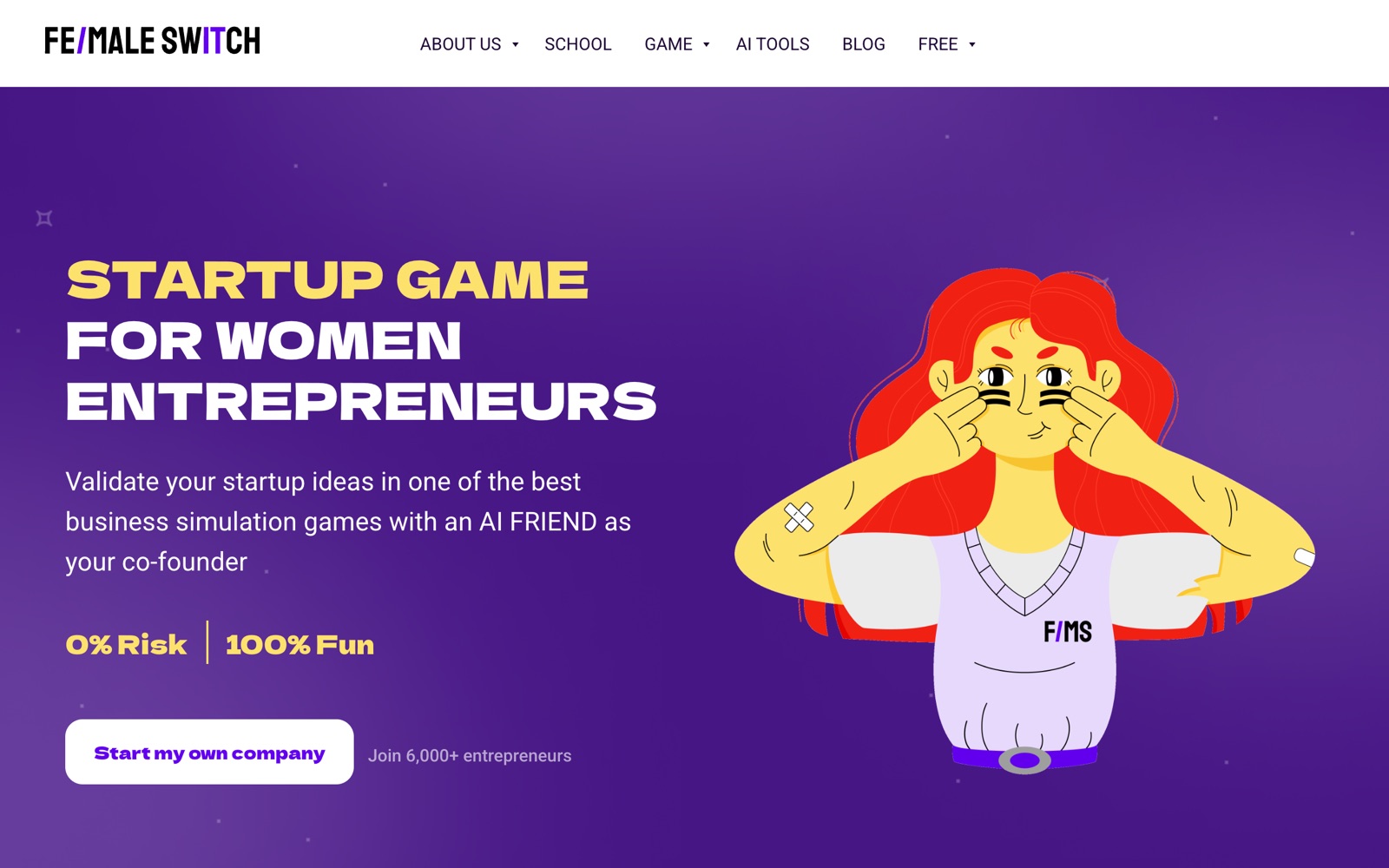
Fe/male Switch (our own startup game)
Full disclosure: this one is OURS. Fe/male Switch is the women-first startup game I founded, where players take a startup from idea to first customer. In the Sandbox you test an idea with an AI co-founder called a PlayPal, the Skill Lab breaks entrepreneurship into short modules, and you climb the FMS Tower as your company levels up. Elona Musk, our AI co-founder, gives feedback on the assignments.
As of October 2026, the Start plan is free (forum access), Intern costs €2.50 a month and Play costs €10 a month with a 14-day trial, all early-bird prices with VAT included, according to our Fe/male Switch pricing page. The free F/MS Startup School adds 30+ Skill Lab modules and 30+ quizzes. Here is how the Fe/male Switch startup game works in more detail. Best for: university students, graduates and anyone who wants to test a real business idea before spending money on it.
Startup Wars
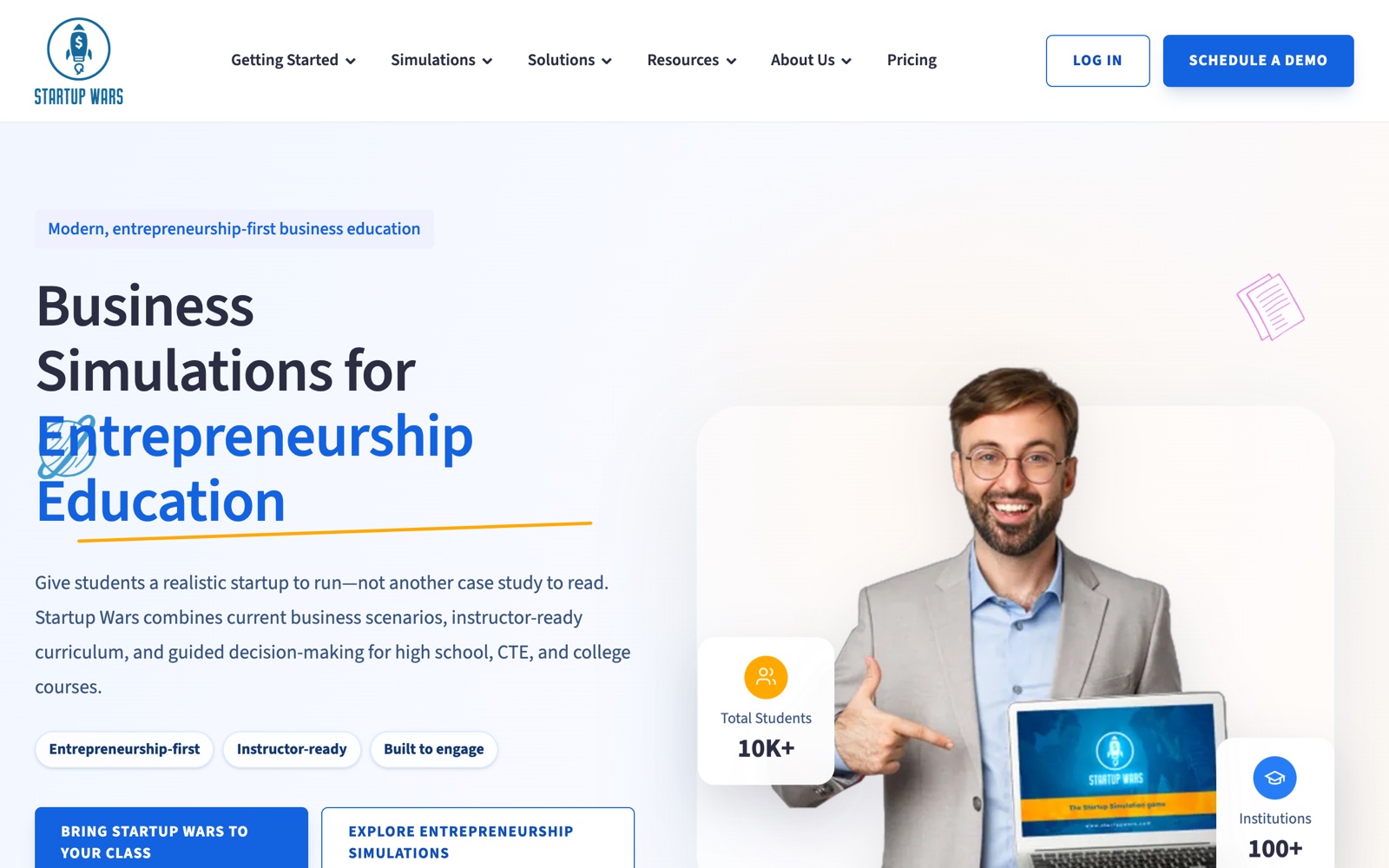
Startup Wars is a browser-based startup simulation for high school, CTE (career and technical education) and college classes. Students run a virtual company and decide on customers, pricing, marketing, inventory, hiring and budget. It has five scenario series with 15 scenarios in total (Mobile App, Vertical Farming, Food Truck, T-Shirt Company and Makers Market), plus an optional AI coach called Milton.
It’s paid: per-student passes cost $24.99 to $59.99 for one year of access as of October 2026, per the Startup Wars pricing page, and schools and districts can ask for custom pricing. If you came here looking for a food truck business game, the Food Truck series is the closest real match.
JA Titan
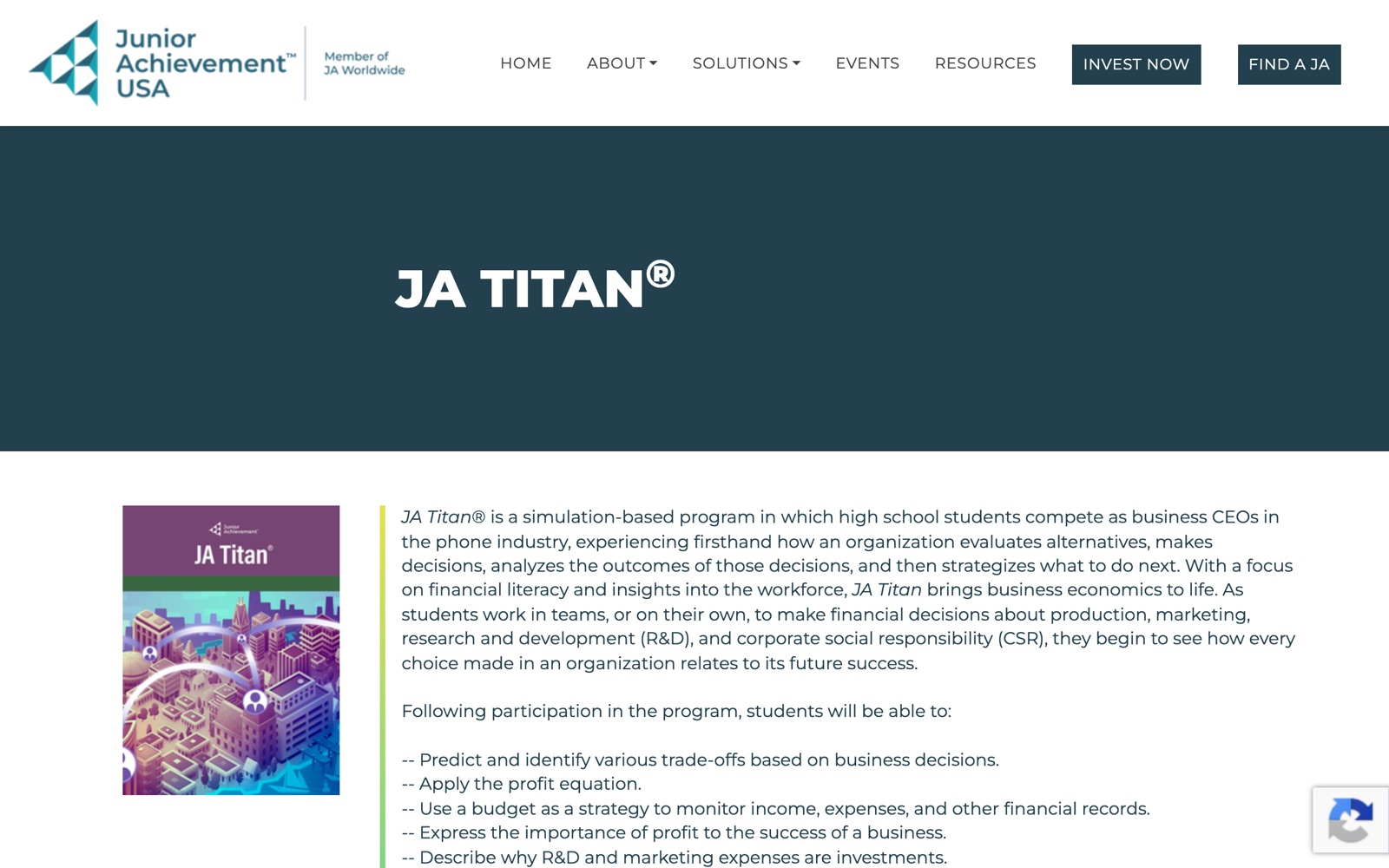
JA Titan from Junior Achievement puts high school students (grades 9 to 12) in the CEO seat of a company in the phone industry. Teams decide on production, marketing, research and development and social responsibility, then study the results and plan the next round. It runs in class, remote live or after school, teachers and volunteers lead it together, and a Spanish translation exists, according to the JA Titan program page.
The big plus is the price. Junior Achievement says its K-12 programs come at no cost to teachers or schools (JA educator FAQ), and you book them through your local JA office.
Influenc’d in the NGPF Arcade
Next Gen Personal Finance (NGPF) has a free 20-minute game called Influenc’d that shows what entrepreneurship feels like through the eyes of a social media creator. It sits in the free NGPF Arcade, which I cover in the commerce section below.
Older students who want board games and tabletop options can pick from our list of entrepreneur games. And once a student wants to try the real thing, our guide to business ideas for students sorts ideas by cost and hours per week.
Business game ideas for students in the classroom (no tech needed)
The best business game ideas for students without computers are a paper Lemonade Market, a Paper Airplane Factory, the $5 Challenge, the Marshmallow Challenge, a Trading Pit, a Problem Hunt and a Pitch Day. Six of the seven fit inside one lesson with paper and a timer, and the table shows what each one teaches.
| Classroom game | Time | Materials | What it teaches | Best for |
|---|---|---|---|---|
| Lemonade Market | 30 min | Price cards, weather cards, a demand chart on the board | Pricing, supply and demand | Grades 4 to 8 |
| Paper Airplane Factory | 40 min | Paper, a timer, a tape line on the floor | Production, quality, teamwork | Grades 6 to 12, college |
| The $5 Challenge | One week plus 3-minute pitches | An envelope with $5 (or a $0 version) | Spotting opportunities, resourcefulness | High school, college |
| Marshmallow Challenge | 18 min plus debrief | 20 spaghetti sticks, 1 yard of tape, 1 yard of string, 1 marshmallow per team | Prototyping, teamwork under time pressure | Grades 5 and up |
| Trading Pit | 25 min | Buyer and seller cards with secret prices | Market prices, negotiation | Grades 8 to 12, college |
| Problem Hunt | 45 min plus interview homework | An interview sheet | Customer research, problem statements | High school, college |
| Pitch Day | 50 min | Play money, a hat full of business ideas | Pitching, persuasion, investing | Grades 6 to 12 |

1. Lemonade Market (paper version)
Teams run lemonade stands for five “days.” Each day you flip a weather card (hot, mild or rainy), teams write a price per cup on a card, and you read sales off a demand chart you drew before class: higher price, fewer cups, and hot days double demand. Teams pay a fixed cost per cup and track profit on a simple sheet. The lesson lands the moment teams start checking the weather card BEFORE they set a price.
2. Paper Airplane Factory
Each team is a factory with four stations: fold, decorate, inspect and sell. You are the customer, and you only buy planes that fly past the tape line. Run a 5-minute production round, count sales and scrap, give teams 5 minutes to redesign their line, then run round two. Bottlenecks and wasted paper show up on the floor where everyone can see them.
3. The $5 Challenge
Stanford professor Tina Seelig gave 14 student teams an envelope with $5 of “seed funding” and two hours to make as much money as possible, followed by a 3-minute presentation in class. The winning team sold its 3-minute presentation slot to a company that wanted to recruit the class, for $650, and the teams that earned the most didn’t use the $5 at all (Tina Seelig in Psychology Today). For younger students, run a $0 version with the same two hours and only their time and skills, and check your school’s rules on handling cash first.
4. Marshmallow Challenge
Teams get 20 sticks of spaghetti, one yard of masking tape, one yard of string and one marshmallow, then have 18 minutes to build the tallest free-standing structure with the marshmallow on top (Marshmallow Challenge rules). The official site credits Peter Skillman with inventing it and Tom Wujec with making it famous. The business lesson: teams that build and test early learn in minute 3 what planners discover in minute 17, which is that a marshmallow is heavier than it looks.
5. Trading Pit
Give half the class seller cards with a secret minimum price and half buyer cards with a secret maximum price. In 5-minute rounds, students find a partner, haggle and report each deal to you, and you write every price on the board. Watch the prices bunch closer together round after round: that’s the class finding a market price. Economist Vernon Smith shared the 2002 Nobel prize in economic sciences for turning lab experiments on markets like this one into a research tool (Nobel Prize facts).
6. Problem Hunt
Each student interviews three people (a parent, a shop owner, a classmate) about one annoying problem in their day, then writes it up as a one-sentence problem statement. In class, teams pick the strongest problem and sketch a fix on paper. Show them a few startup problem statement examples first so they know what a sharp one looks like.
7. Pitch Day
Teams draw a random business idea from a hat (or use our free give me a business idea generator), get 20 minutes to prepare and 2 minutes to pitch. Every student gets $1,000 in play money to invest in any team except their own. The team with the most money wins, and the debrief asks why the money went where it did.
For a subject-specific version, here is how to build a business game from scratch, and our list of business project ideas turns a one-hour game into a term project.
What are good business learning games for beginners?
Good business learning games for beginners have one shop, a handful of decisions and fast feedback: Lemonade Stand, Good Pizza, Great Pizza and Virtonomics in its short intensive mode. Start there before a full company simulation, because ten decisions at once bury the lesson for a first-timer.
Lemonade Stand (Coolmath Games)
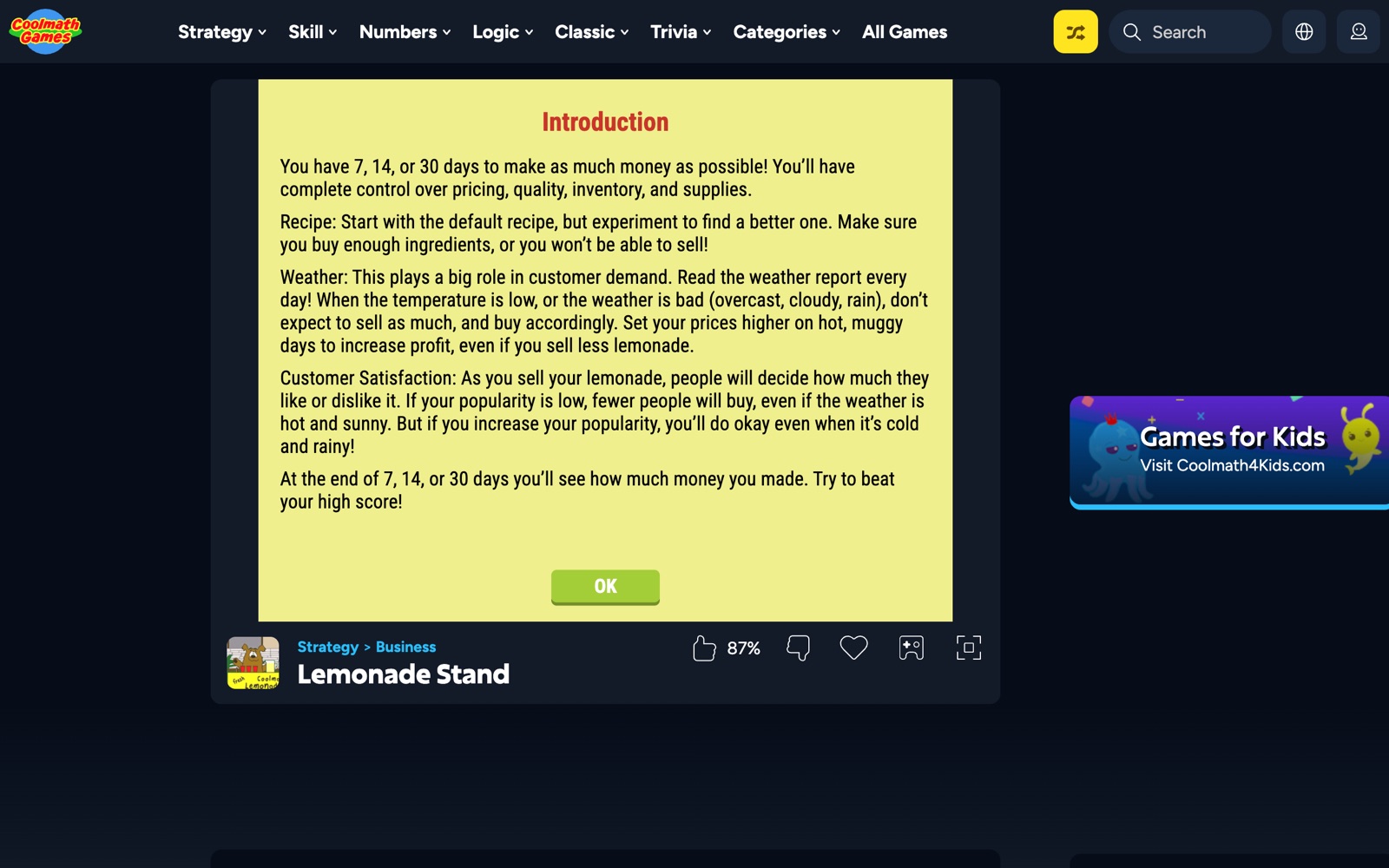
The classic. Your goal is to make as much money as you can in 7, 14 or 30 days: buy cups, lemons, sugar and ice, set your recipe based on the weather, and adjust your price. It plays free in the browser and on mobile, with ads (Lemonade Stand on Coolmath Games). The game page lists a release date of December 31, 1998, which makes it older than most of the students playing it.
Good Pizza, Great Pizza
Players run a pizza shop, fill customer orders while earning enough to keep the shop open, and spend on new toppings and equipment to beat a rival. It’s free on iOS and Android with ads and in-app purchases, and Google Play shows 100M+ downloads as of October 2026 (Google Play listing). Paid versions run on Steam (with no ads) and Nintendo Switch. Good for: reading what customers actually ask for, and saying no to upgrades you can’t afford yet.

Virtonomics
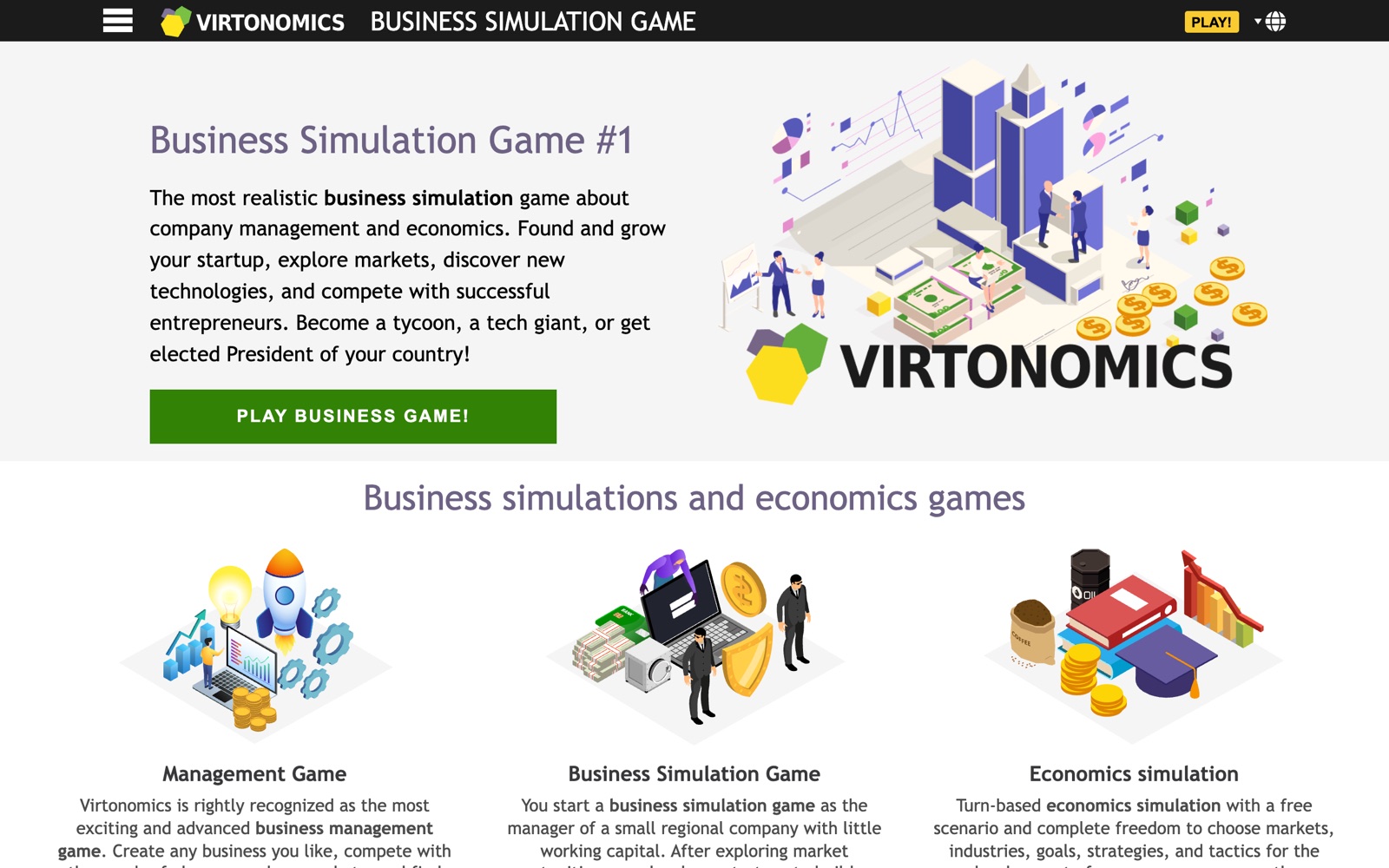
Virtonomics is a free-to-play multiplayer business simulation in the browser and on mobile, where players found companies and decide on production, sales, purchasing, staff and investment (Virtonomics). For classes, the Virtonomics Business Challenge runs closed competitions: intensive mode uses 1-hour rounds with 5 to 8 hours recommended, and classic mode uses 1-day rounds with 10 to 30 rounds recommended, per its Business Challenge page. It’s more involved than pizza, so I’d give it to older teens and college students.
How to learn faster from any beginner game
- Keep a decision log. One line per round: what you changed and what you expected to happen.
- Change one thing at a time. Price OR recipe OR stock, so you know which move caused the result.
- Replay the same scenario. The second run is where the learning sits.
- Write the profit formula at the top of the page. Profit = revenue minus costs, and every decision moves one side of it.
Which games do business students play in college?
Games for business students in college are full company simulations graded as part of a course: The Business Strategy Game, Capsim and Hubro are the big names, and Virtonomics runs competitions for business schools. Students work in teams over several rounds, and instructors get reports on decisions, quizzes and peer reviews.
The Business Strategy Game (BSG)
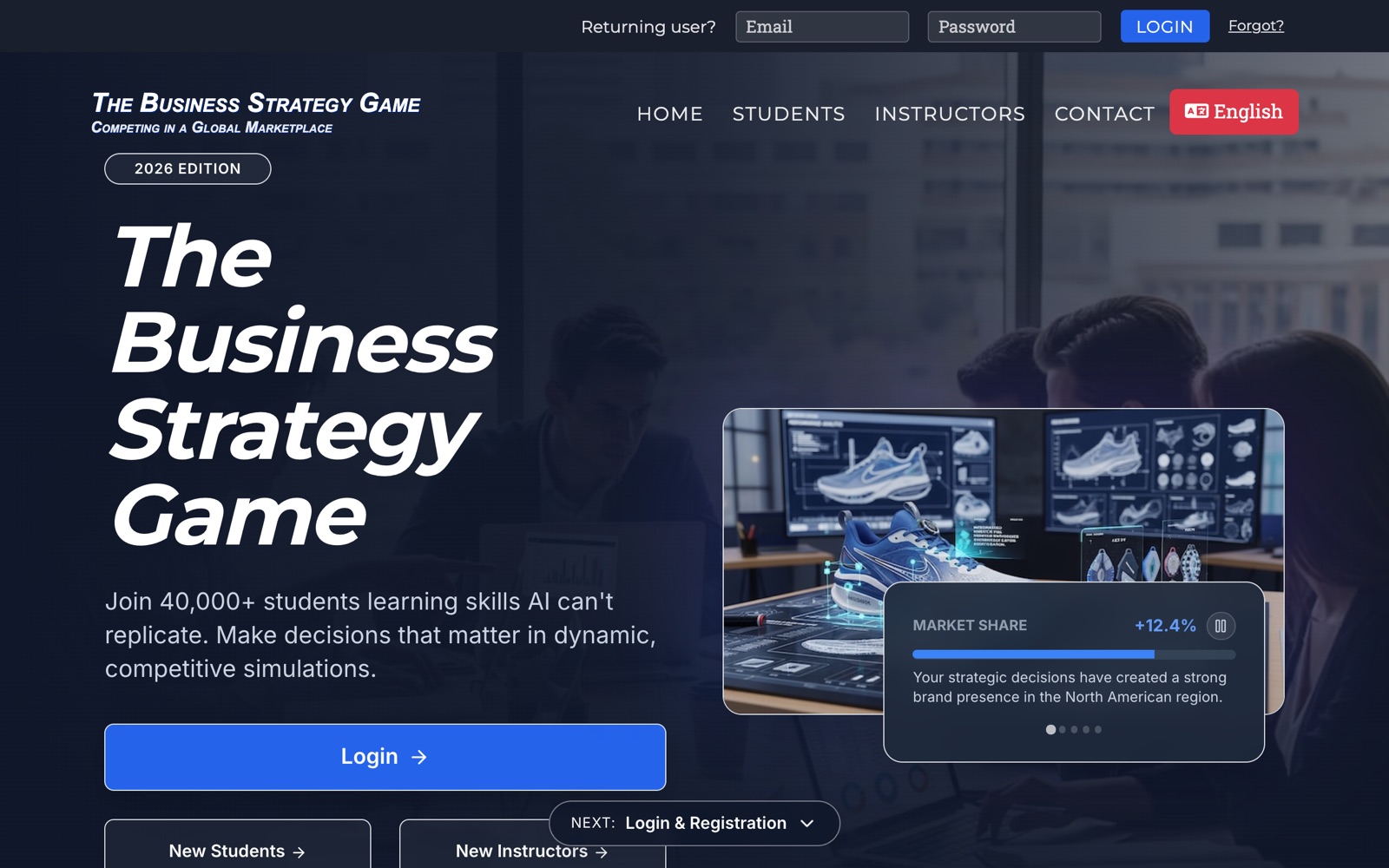
In BSG, class members split into teams, and each team runs an athletic footwear company against companies managed by classmates across four global regions. All companies start equal, and the board of directors expects $2.00 earnings per share, a 20% return on equity, a $30 stock price, a B credit rating and an image rating of 70 (BSG student tour). Students buy a registration to play after the instructor sets up the class, and the homepage says 40,000+ students take part. Top companies can enter the Best-Strategy Invitational, a 2-week competition held 3 times a year.
Capsim
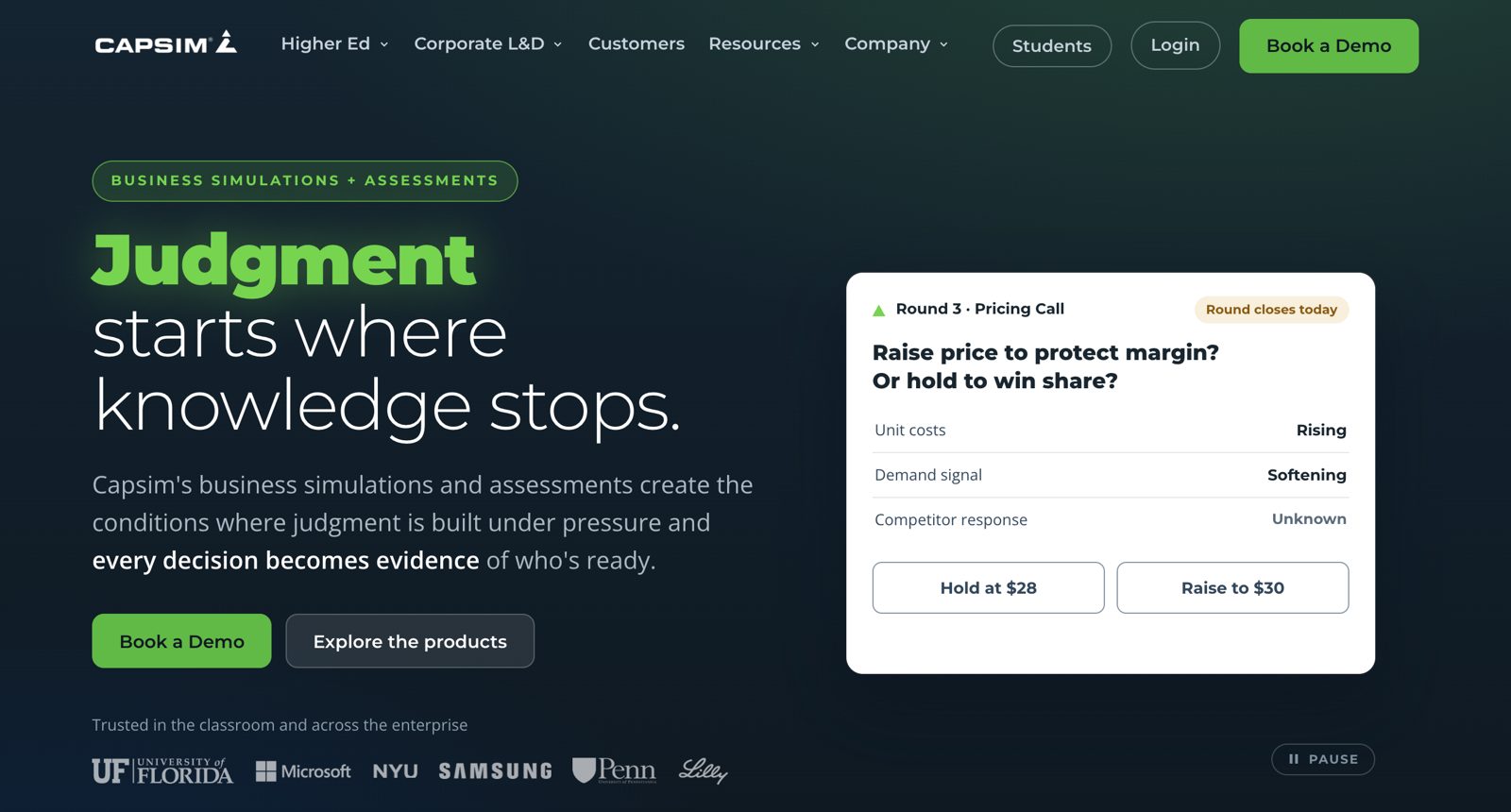
Capsim makes business simulations, inbox simulations and assessments for universities and corporate training. Students run an entire company round after round, with incomplete information and hidden competitor moves, so a pricing call in round 3 still shapes round 8. Capsim reports 2M+ learners and customers in 50+ countries, and pricing comes after a demo (Capsim).
Hubro Simulations
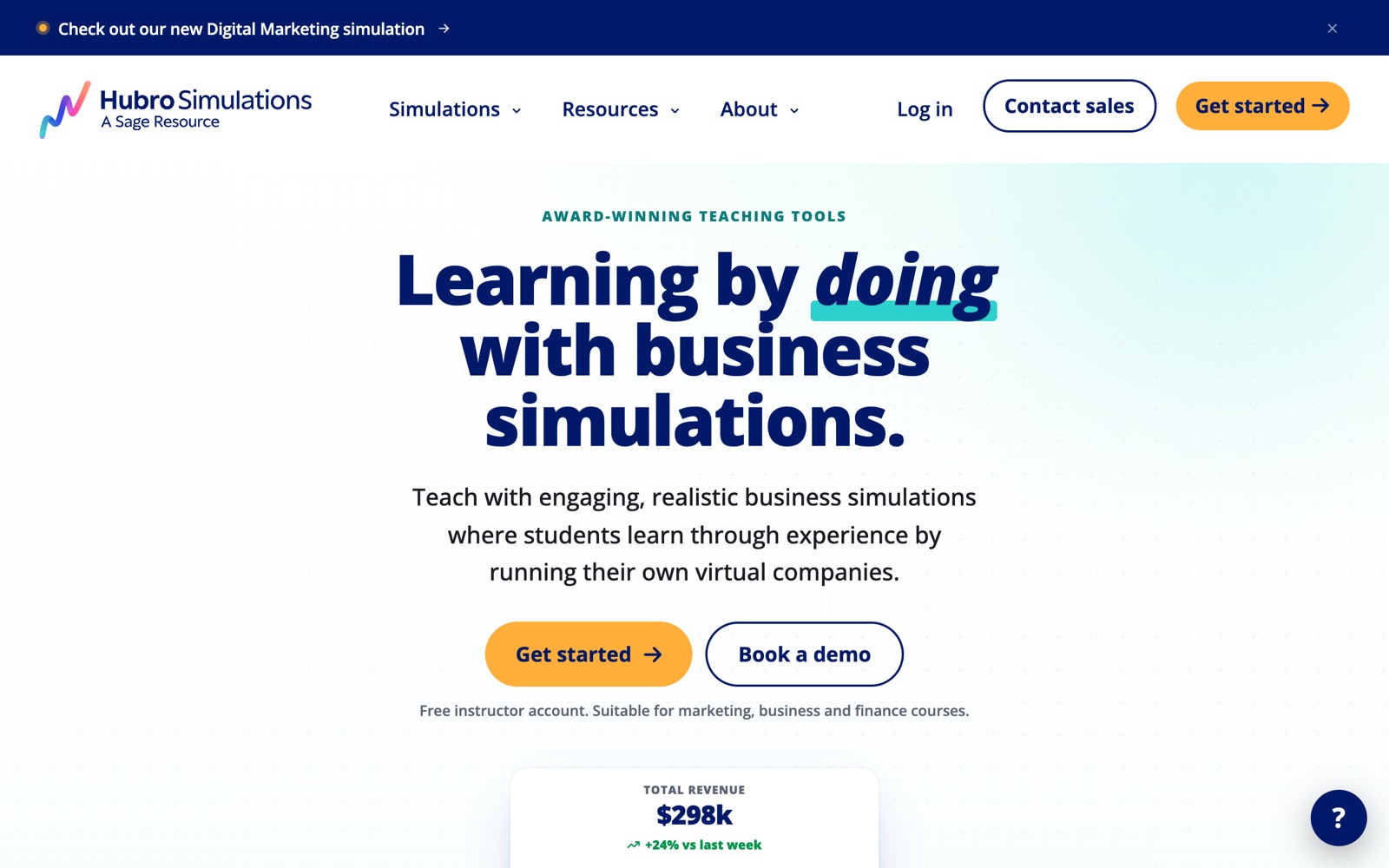
Hubro, based in Oslo and owned by Sage, sells online simulations in marketing, finance and accounting, sustainable business and strategic management. Students run virtual companies and decide on pricing, marketing, production and finance, inside Canvas, Moodle, Blackboard or Brightspace. Instructors get a free account, Hubro says more than 500 universities and companies use it, and student pricing isn’t public (Hubro Simulations).
For a course on organizational management, BSG and Capsim fit strategy and capstone courses best, and Hubro fits a single marketing or accounting module. College students who want to turn the simulation into a side business can browse these youth business ideas for something small to test for real.
How can teachers run a business game in class?
Teachers can run a business game in one 50-minute lesson: a 5-minute hook, teams with roles, two decision rounds with market results in between, a 10-minute debrief and an exit ticket. The debrief carries the learning, because research on simulation games shows they teach best when students act, can replay, and get the game on top of regular teaching.
That research is a meta-analysis by Sitzmann covering 65 studies and 6,476 trainees. Compared with other groups, people taught with computer-based simulation games had 20% higher self-efficacy after training, 11% higher declarative knowledge, 14% higher procedural knowledge and 9% higher retention (Personnel Psychology, 2011). The same paper warns of publication bias and found that games lost to comparison methods that were themselves active. My reading: a game beats a passive lecture, and it pays off only when you wrap real teaching around it.
A 50-minute business game lesson plan
| Step | Minutes | Teacher does | Students do |
|---|---|---|---|
| 1. Hook | 5 | Holds up an everyday item and asks the class to price it | Call out prices and defend them |
| 2. Teams and roles | 5 | Splits the class into teams of 3 or 4 and hands out role cards: CEO, money, marketing, operations | Name the company and pick roles |
| 3. Round 1 | 10 | Writes the one rule that matters on the board (profit = revenue minus costs) and starts the timer | Make decisions and log them |
| 4. Market results | 5 | Reveals results and updates the scoreboard | Compare results with what they expected |
| 5. Round 2 | 10 | Adds one twist: a new rival, a cost spike or a rainy day | Adjust decisions and write down why |
| 6. Debrief | 10 | Asks the three debrief questions below | Answer in teams, then share with the class |
| 7. Exit ticket | 5 | Collects one sentence from each student | Write what they would change next time |
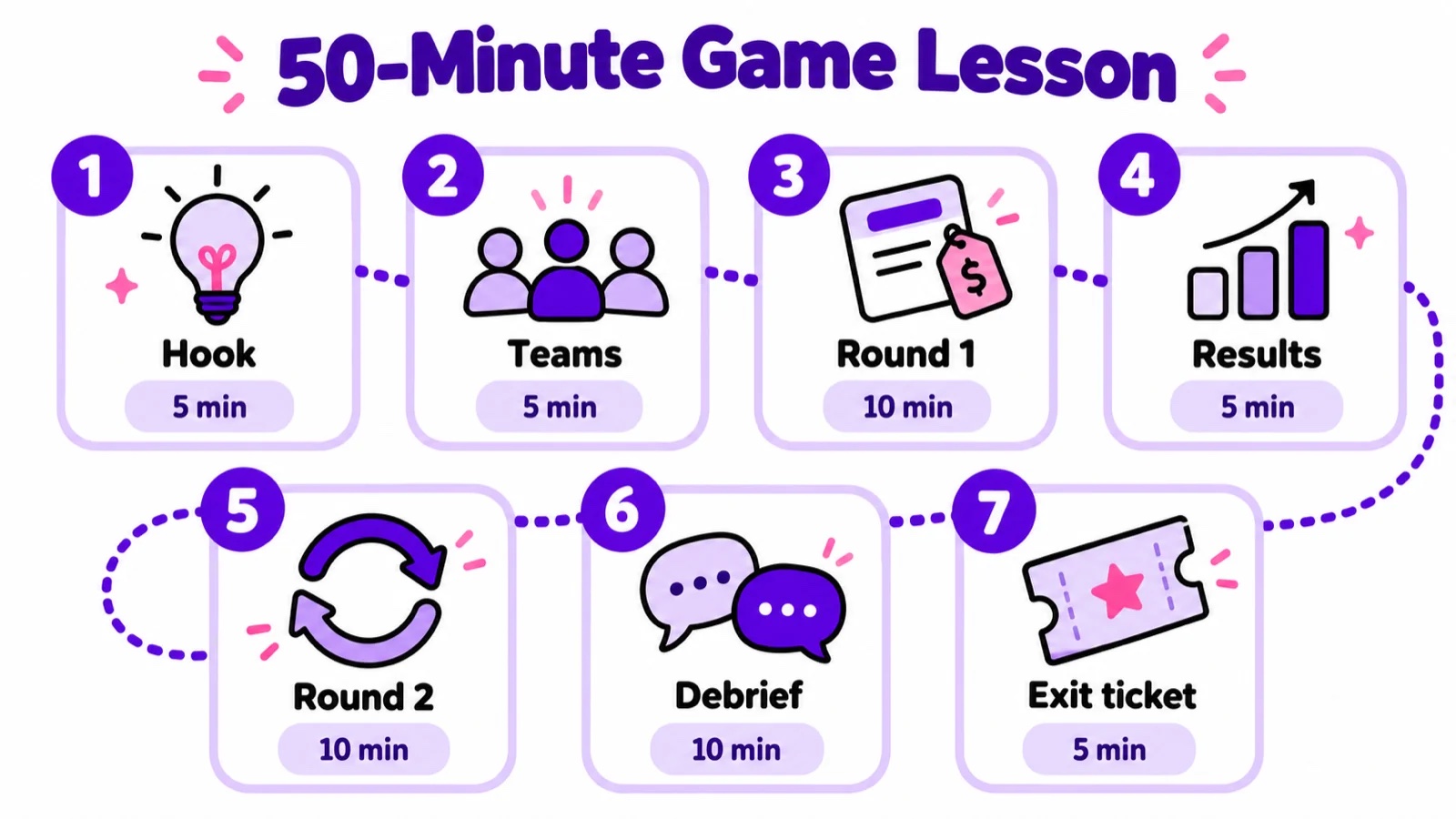
Any game from this guide slots into rounds 1 and 2: a paper Lemonade Market for grade 5, Startup Wars or JA Titan for grade 11, a BSG decision round for a college seminar.
The 3 debrief questions
- What did you decide, and why? Students read from their decision log, so every answer rests on what they wrote down at the time.
- What happened in the market? Compare the result with what the team expected.
- What would a real company do next? This is where game moves turn into business ideas students can name.
How to grade a business game
Put most of the grade on the decision log and the debrief, and a small part on the final score. A team that lost money and can explain why learned more than a team that got lucky. A split that works: 40% decision log, 30% debrief answers, 20% peer rating for teamwork, 10% final result.
Mistakes to avoid
- Too many rules. If explaining the game takes longer than 5 minutes, cut rules.
- Skipping the debrief. Without it, students remember who won and forget why.
- One student runs the whole team. Rotate roles every round.
- Letting the game replace the lesson. Sitzmann’s data shows games work best as a supplement to teaching.
What are the best commerce and accounting games for students?
The best commerce games for students cover accounting, money and markets: Accounting Play’s Debits & Credits app for bookkeeping, The Stock Market Game for investing, the free NGPF Arcade for personal finance, and Hubro’s accounting simulations at college level. Add three no-tech games for days when the laptops stay closed.
| Game or activity | Topic | Level | Cost (October 2026) |
|---|---|---|---|
| Accounting Play: Debits & Credits | Debits, credits, the accounting equation | High school to accounting exam prep | Free with in-app purchases |
| The Stock Market Game | Stocks, bonds, mutual funds | Grades 4 to 12, college, adults | No cost or low cost |
| NGPF Arcade | Budgeting, credit, paying for college | Middle and high school | Free |
| Hubro finance and accounting simulations | Financial statements, cash flow, valuation | College | Paid student access |
| Virtonomics | Economics, production, trade | Older teens and college | Free to play |
| T-Account Relay (no tech) | Debits and credits | Grade 11 and up | Free |
| Balance Sheet Sort (no tech) | Assets, liabilities, equity | High school, college | Free |
| Receipt Detective (no tech) | Profit and loss | Grade 7 and up | Free |
Accounting Play: Debits & Credits
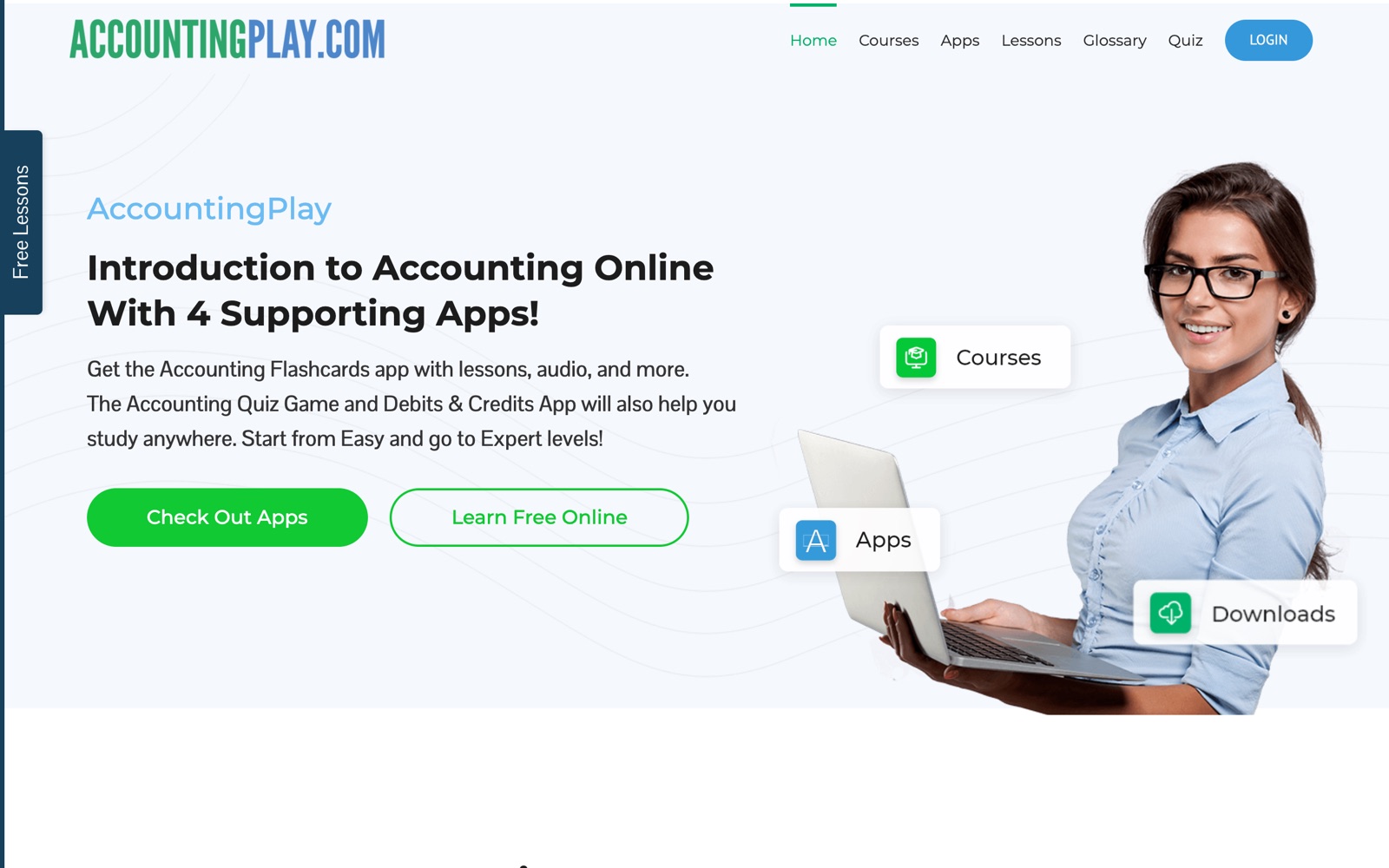
A fast game for the accounting equation: you play with debit and credit coins, and free study notes cover journal entries and accounting theory. It’s free on iPhone and iPad with in-app purchases (the full content pack costs $5.99 as of October 2026), with an Android version too (App Store listing). The team behind Accounting Play also makes an Accounting Quiz app with almost 700 questions.
The Stock Market Game
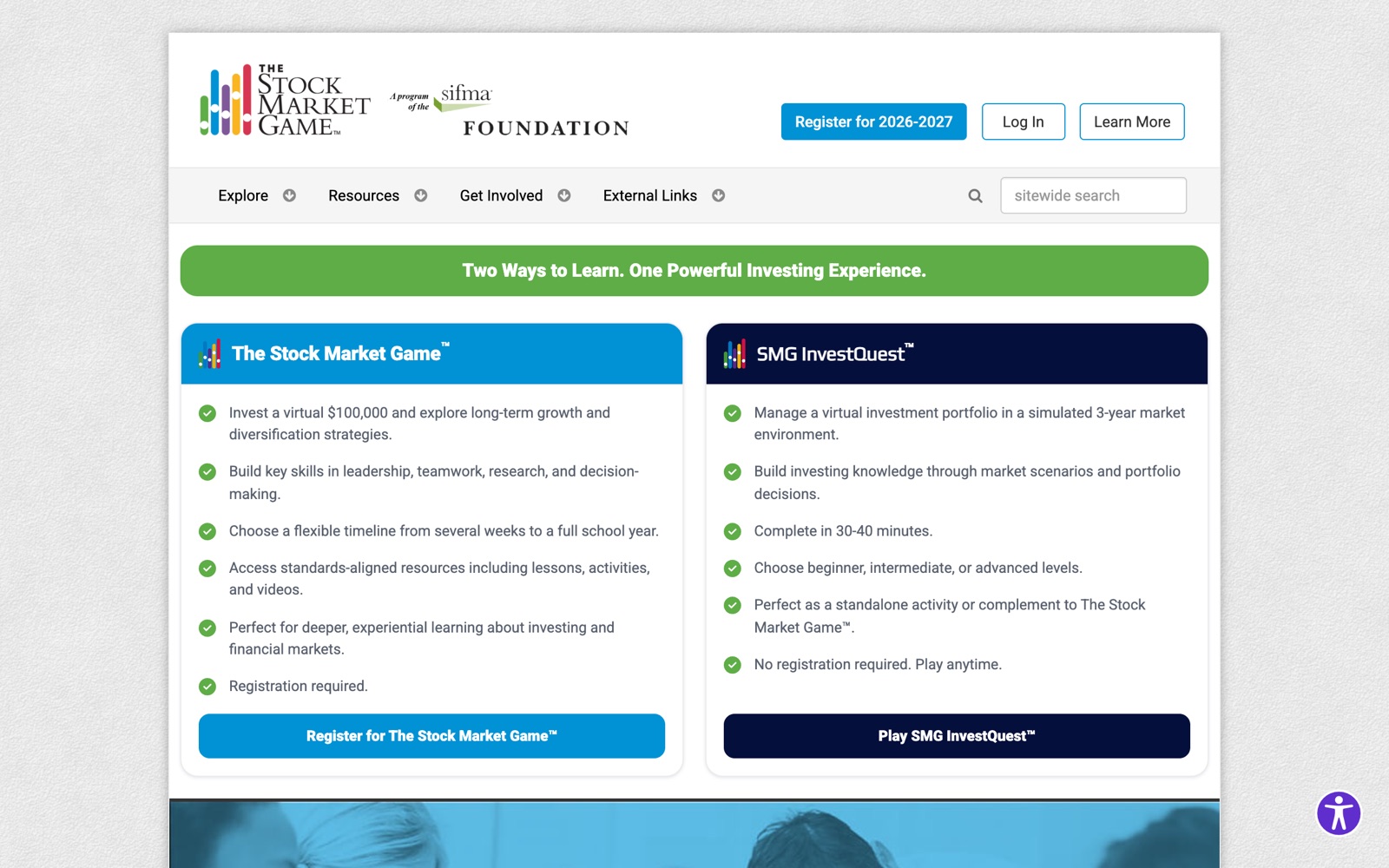
Run by the SIFMA Foundation, The Stock Market Game gives teams a virtual $100,000 portfolio to invest in stocks, bonds and mutual funds listed on the NYSE and Nasdaq. It’s designed for grades 4 to 12, college and adult learners, available at no cost or low cost, and runs anywhere from a few weeks to a full school year. The Foundation says it has prepared nearly 20 million students (The Stock Market Game).
NGPF Arcade
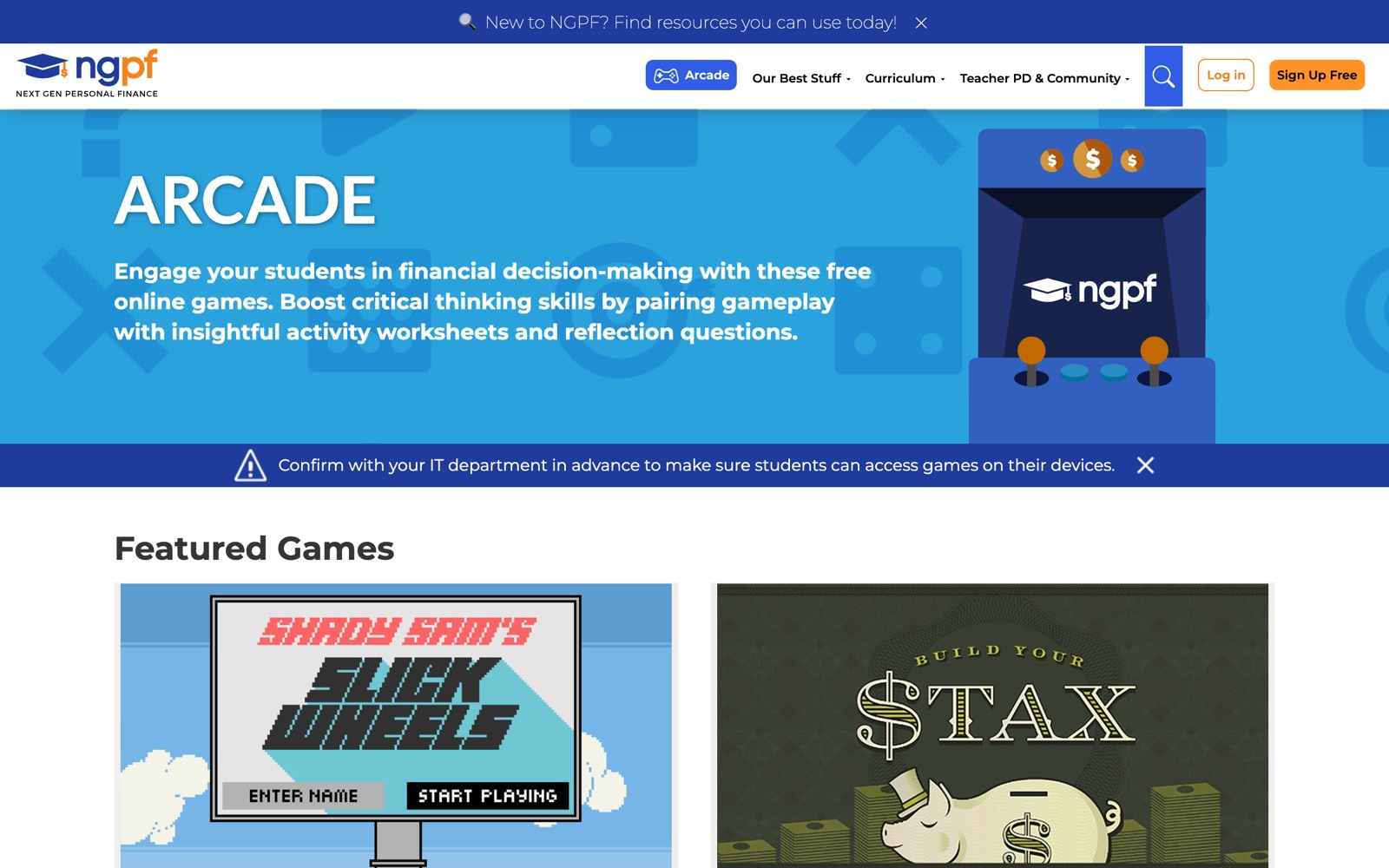
The NGPF Arcade has 12 free games of 5 to 20 minutes each on budgeting, credit, insurance, buying a car, investing, careers and entrepreneurship. SPENT challenges students to make it through a month living paycheck to paycheck, and Payback puts students in charge of getting to and through college. Each game comes with worksheets and reflection questions, and NGPF keeps all of its materials free.
No-tech accounting games for commerce classes
- T-Account Relay: Teams line up and you read a transaction, say “bought stock on credit for $500.” The first student runs to the board and writes the debit, the second writes the credit. Wrong side sends them to the back of the line.
- Balance Sheet Sort: Shuffle 30 cards (cash, bank loan, delivery van, unpaid bills, owner’s capital) and have teams sort them into assets, liabilities and equity against the clock, then check that both sides add up.
- Receipt Detective: Hand out a bag of invented receipts from a pretend café and ask teams to build a one-month profit and loss statement, then decide whether the café made money.
In a commerce stream with accountancy, business studies and economics, use the accounting games for accountancy, JA Titan or Startup Wars for business studies, and the Trading Pit or The Stock Market Game for economics.
FAQ about business games for students
What are business games for students?
Business games for students are games and simulations where students run a pretend business, make decisions on price, stock, staff or investment, and see the results. They range from 10-minute browser games to semester-long company simulations graded in college courses.
Are there free online business games for students?
Yes. Lemonade Stand on Coolmath Games, the NGPF Arcade and Virtonomics are free, The Stock Market Game is no cost or low cost, and JA Titan is free for schools through Junior Achievement. Our own Fe/male Switch game has a free Start plan.
Are there browser games focusing on entrepreneurship education?
Yes. Startup Wars (paid, for high school and college), NGPF’s Influenc’d (free, 20 minutes) and the Fe/male Switch startup game (free Start plan) all run in a browser with nothing to install.
What business activities work for high school students?
JA Titan, Startup Wars and The Stock Market Game work well online, and the Trading Pit, Problem Hunt and Pitch Day work with no tech at all. Pair any of them with the 50-minute lesson plan above.
Are there business simulation games with active communities?
Virtonomics puts thousands of players in one shared economy where they compete and trade, BSG publishes new global rankings of top-performing companies every Monday, and Fe/male Switch has a forum on its free plan.
What are the best board games for teaching kids about business?
Board games where kids buy, sell and handle money work well when you add a 5-minute debrief about the decisions they made. For a classroom, the paper Lemonade Market and the Trading Pit above teach the same ideas with no box to buy.
Are there free accounting games online?
Yes. Accounting Play’s Debits & Credits app is free to download with in-app purchases, and accountingplay.com has free lessons and a quiz. For a no-tech option, run the T-Account Relay or the Balance Sheet Sort.
Do business simulation games actually work?
Yes, when they’re used well. A meta-analysis of 65 studies found 14% higher procedural knowledge and 9% higher retention for learners taught with simulation games, with the best results when the game was active, replayable and added to other teaching.
How long should a business game take in class?
Plan 50 minutes for a first game: 5 to hook, 5 for teams, two 10-minute rounds, 5 for results, 10 for the debrief and 5 for an exit ticket. College simulations like BSG and Capsim run over several weeks of a course.
Keep learning
- Business startup ideas for students: ideas students can launch with little money.
- Startup business ideas for college students: ideas that fit around a class schedule.
- Business model canvas ideas: map a game company or a real one on a single page.
- Free courses to start a business: the next step once the game ends.
- Fe/male Switch startup directory: real startups to study as class case examples.
Authors
Mean CEO | Violetta Bonenkamp AUTHOR
MeanCEO (aka Violetta Bonenkamp) is a serial startup founder who brings a decade of entrepreneurial experience to the table. Armed with five Higher Education degrees (including an MBA) and profound knowledge in sectors like blockchain, AI, zero code and education she is a maestro in turning ideas into validated businesses, building prototypes in a few hours and devising marketing strategies for tech startups that increase founder's chances of success. Recognized as one of the top 100 women in EU startups, her guidance is a treasure trove for upcoming and established entrepreneurs alike. Through her venture into entrepreneurship, she has created the "gamepreneurship" methodology, an innovative method for learning business through gameplay.

Elona Musk
Elona Musk stands as a mix of innovation and expertise in the realm of AI, serving as the Chief AI Officer at Fe/male Switch. As an embodiment of the startup game for women, Elona is the co-founder you dream of - knowledgeable, always active, capable of keeping trade secrets to herself and equity-free. With her hands-on approach in entrepreneurship simulation, she provides vital strategies and insights that are essential for navigating the complex startup journey and saves entrepreneurs hours of work by automating many tasks, starting from market research to managing social media to writing business plans. Whether it's a marketing strategy for tech startups that you need or a solid IP strategy, Elona's AI-driven insights help carve successful paths for entrepreneurs who don't have technical or startup skills.
Who we are
We are experienced and fun entrepreneurs and awesome AI PlayPals who love building a startup simulator for you to succeed in business

Violetta Bonenkamp
Business and AI expert

Dirk-Jan Bonenkamp
Legal, IP and finance expert
Elona Musk
The first AI entrepreneur

Petra Thiel
The first AI startup investor

Samantha Altman
The first AI startup mentor

Sia Quick
AI Market Research expert
Unleash your inner founder with AI Startup Tools!
Don't just dream it, build it with our range of AI startup tools. From brainstorming ideas to naming your product and crafting a unique logo, these AI tools are your secret weapon to conquer the startup world.
 Newest
Boost Your SEO Game
Generate a customized SEO strategy for your small business agency by answering a simple question. Our tool focuses on free and easy…
 27
19
5/5
Newest
Positioning Pro - Your Strategic Partner
Positioning Pro helps bootstrapped entrepreneurs discover effective segmentation and targeting strategies without spending money. Get tailored insights simply by answering one question.
13
6
5/5
Newest
Gated Content Strategy Tool
This tool provides actionable strategies for bootstrapped entrepreneurs, leveraging free and easy methods to kickstart your journey.
25
18
5/5
Recommended for you

Pitch Deck Agencies for Climate Tech Startups, Energy and Biotech Founders
Pitch deck agencies for climate tech startups, energy and biotech founders: who handles science-heavy decks, published prices and how to brief them.
Read more
Write for Us: Business, Technology and Startup Guest Posts
Write for us: business, technology, AI and fintech guest posts for founders. See what Fe/male Switch publishes, the guest post checklist and how to pitch.
Read more
7 Catchy and Unique Business Name Ideas
Explore 7 catchy business name ideas that stand out! Get easy tips, hacks, and a splash of humor to kickstart your startup journey! Dive in and find your…
Read more